



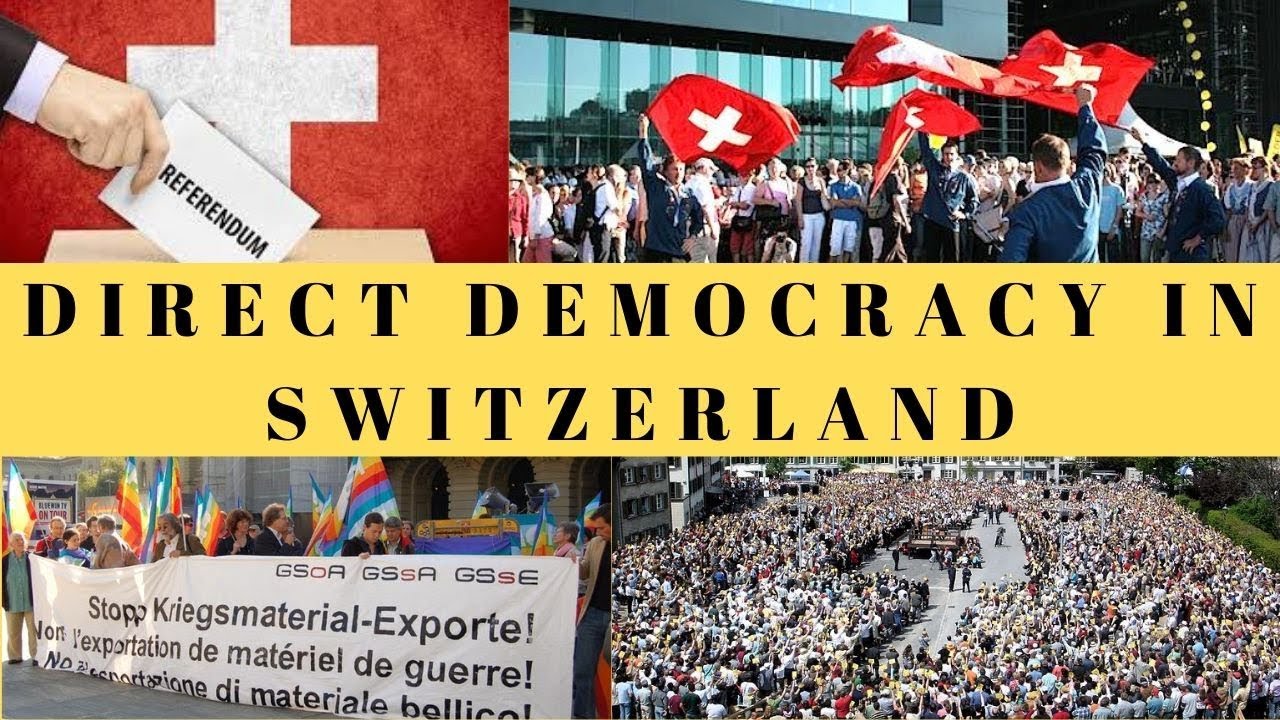
We are proposing a similar democracy system to the Swiss. Not exactly the same, but similar. The Swiss system puts the people at the heart of decision making. Their country is run mostly by the people with more referendums annually than New Zealand has had in 200 years, and now the country decides with minimal government intervention on most key subjects.
Before we take a closer look at how their system works, its important to understand we are talking about using a similar process to them, but that the actual decision making itself has absolutely nothing to do with Switzerland. We are two different sovereign nations and what the Swiss people decide has absolutely no bearing on New Zealand decisions.
We are proposing some key differences such as neighbourhood level decision making as well as large national decisions. The eligibility and the process and decision making content will vary between the different types of referendums.
For now, lets just take a look at how the Swiss do things and lets hear your comments.
This content has been taken directly from their website.
Direct Democracy
Direct democracy is one of the special features of the Swiss political system. It allows the electorate to express their opinion on decisions taken by the Swiss Parliament and to propose amendments to the Federal Constitution. It is underpinned by two instruments: initiatives and referendums.
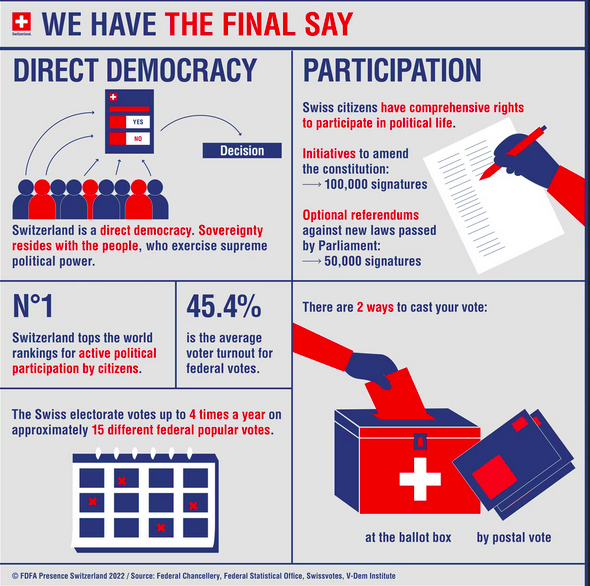
In Switzerland the people play a large part in the decision-making process at all political levels. All Swiss citizens aged 18 and over have the right to vote in elections and on specific issues. The Swiss electorate are called on approximately four times a year to vote on an average of fifteen such issues. In recent decades, voter turnout has been a little over 40% on average.
Citizens are also able to propose votes on specific issues themselves. This can be done via an initiative, an optional referendum, or a mandatory referendum. These three instruments form the core of direct democracy.
Popular initiative
The popular initiative allows citizens to propose an amendment or addition to the Constitution. It acts to drive or relaunch political debate on a specific issue. For such an initiative to come about, the signatures of 100,000 voters who support the proposal must be collected within 18 months. The authorities sometimes respond to an initiative with a direct counter-proposal in the hope that a majority of the people and the cantons support that instead.
Optional referendum
Federal acts and other enactments of the Federal Assembly are subject to optional referendums. These allow citizens to demand that approved bills are put to a nationwide vote. In order to bring about a national referendum, 50,000 valid signatures must be collected within 100 days of publication of the new legislation.
Mandatory referendum
All constitutional amendments approved by Parliament are subject to a mandatory referendum, i.e. they must be put to a nationwide popular vote. The electorate are also required to approve Swiss membership of specific international organisations.
Could New Zealand do something similar?
What would we do differently?
Would it work for New Zealand?

I must say, the Swiss System is quite intriguing! But isnt it a bit cumbersome to have so many referendums? I mean, its democratic sure, but wouldnt it slow down the decision-making process? Also, how do they manage to keep voter fatigue at bay? Quite curious about the practicality here.
Post: The Swiss System- The most democratic established system there is
Comment: Intriguing read! The Swiss System indeed presents a unique model of democracy where the citizens have a significant say in the policy-making process. I wonder how this system would work in larger countries with diverse populations. Would it be feasible to adapt this system to countries with a different cultural and political context, or is it specifically tailored to Switzerlands unique circumstances?
Post: Direct Democracy
Comment: This article on direct democracy raises some thought-provoking points. The concept of citizens having a direct say in laws and policies sounds very democratic, but I wonder about the practicality. Are citizens knowledgeable enough about all aspects of governance to make informed decisions? And wouldnt this slow down the decision-making process significantly?
Post: Popular initiative
Comment: The popular initiative seems like a powerful tool for citizens to influence policy-making. However, I wonder whether there are safeguards in place to prevent misuse. Could it potentially be manipulated by a vocal minority, or does the process ensure that only initiatives with widespread support are considered?
Post: Optional referendum
Comment: The optional referendum seems to strike a balance between representative and direct democracy. It allows citizens to challenge laws passed by the parliament, which is a great check on the power of the government. But I wonder about the threshold for triggering such a referendum. If its too low, wont it lead to a constant state of indecisiveness and instability?
Post: Mandatory referendum
Comment: Mandatory referendums, as per my understanding from the article, are a robust way to ensure that monumental changes are supported by the majority of the populace. It seems like a great way to uphold democratic principles, but would it be practically feasible for every country? For instance, in countries with lower levels of education or political engagement, would this system still work, or would it be more susceptible to manipulation?
Swiss democracy thrives on citizen involvement. Can diverse, larger countries manage to replicate this without chaos ensuing?
The Swiss System- The most democratic established system there is.
Reading about the Swiss system, I cant help but admire its effectiveness. The citizens have a direct say in the laws and decisions of the country. This can lead to a high level of societal engagement and active participation, as citizens feel more involved and responsible for their government. However, I wonder how this would work in a larger, more diverse country. Would the process become too chaotic and inefficient? Also, considering the varying levels of education and understanding of complex issues among citizens, could this lead to ill-informed decisions?
Direct Democracy
Direct democracy, as a system where citizens vote on laws directly rather than through elected representatives, certainly appears to be the most fair and democratic system. However, I am left wondering about its practicality in larger states. The sheer volume of decisions to be made could be overwhelming for citizens. Additionally, the complexity of some issues might necessitate expertise that the average citizen does not possess. Could this lead to oversimplification of complex issues and ill-informed decisions?
Popular initiative
The popular initiative seems like an excellent method for citizens to propose new laws or changes to the constitution. It ensures that the concerns of the people are heard and considered. However, I question the potential for misuse. Could a well-funded or well-organized minority group use this tool to push through laws that are not in the best interest of the majority?
Optional referendum
An optional referendum allows citizens to challenge laws passed by the parliament, which seems like a powerful tool for keeping the government in check. But I wonder if this could lead to a constant state of uncertainty, with laws continually being challenged and potentially overturned. Could this hinder the governments ability to effectively govern?
Mandatory referendum
A mandatory referendum ensures that significant changes, like amendments to the constitution, are approved by the citizens. This seems like a crucial safeguard against potential governmental overreach. However, I am concerned about the potential for voter fatigue. With regular referendums, citizens might feel overwhelmed and disengage from the process. Additionally, it could potentially slow down the process of implementing necessary changes.
The Swiss System- The most democratic established system there is.
Comment: This is an interesting read, and it undoubtedly underscores the effectiveness of the Swiss political system. It appears that the Swiss system balances the powers of the government with the will of the people, which is commendable. However, Im curious to know how this system handles complex issues that require expert knowledge to understand fully. Would the average citizen have enough information to make informed decisions on such matters?
Direct Democracy
Comment: The concept of Direct Democracy is intriguing as it provides every citizen an equal opportunity to influence governmental decisions. However, I wonder how practical this is on a large scale, especially in countries with huge populations. Furthermore, how does the system ensure that all votes are informed and not just based on popular views or misinformation?
Popular initiative
Comment: The idea of a popular initiative is empowering as it gives citizens the ability to propose new laws or changes to existing ones. However, Id be curious to know how this system prevents a potential floodgate of initiatives that may not be practically feasible or beneficial to the society as a whole. Also, how does this system ensure that the proposed initiatives are representative of the majority and not just a vocal minority?
Optional Referendum
Comment: An optional referendum seems like a balanced way of implementing the publics will without hindering the legislative process. However, I have concerns about the threshold required to trigger such a referendum. If set too low, it may lead to frequent disruptions in governance; if set too high, it might prevent legitimate concerns from being addressed.
Mandatory Referendum
Comment: The idea of a mandatory referendum for significant constitutional changes is a compelling way to ensure that the citizens are involved in the major decisions that shape their nation. However, I wonder how this process ensures that citizens are adequately informed about the complexities and implications of the proposed changes. Also, it would be interesting to know how this system prevents the potential for manipulation by those with significant resources or influence.
Interesting points! But dont forget, no system is perfect. Its about striking the right balance.
Post: The Swiss System – The Most Democratic Established System There Is.
Comment: This post presents a fascinating perspective on the Swiss system, which is often hailed for its direct democracy. I wonder how this system would translate to larger nations with a more diverse populace. Would the systems emphasis on citizen participation and consensus-building be as effective in societies where political, cultural, and economic differences are more pronounced?
Post: Direct Democracy
Comment: The concept of direct democracy is indeed appealing, as it seems to offer a more accurate representation of public opinion. However, I am curious about its practicality on a large scale. How would complex policy issues be made understandable to the general public? Also, would this not place an enormous decision-making burden on citizens, potentially leading to voter fatigue?
Post: Popular Initiative
Comment: The popular initiative seems like a powerful tool for citizens to influence government policy. However, I wonder how we could ensure that it is not abused or used to push for policies that serve only a small, vocal minority rather than the common good. There must be checks and balances in place to prevent its misuse.
Post: Optional Referendum
Comment: The optional referendum is a rather intriguing concept. It provides an opportunity for citizens to challenge laws passed by the government. However, I am curious about its feasibility. What percentage of the public would need to request a referendum for it to occur? And what would be the implications if a law that is critical for national security or economy is put on hold due to a referendum?
Post: Mandatory Referendum
Comment: A mandatory referendum seems like a strong check on government power, ensuring that significant constitutional changes cant be made without public approval. However, it also feels like it could slow down the decision-making process. I wonder how this balance between public involvement and efficiency is maintained in practice. In times of crisis, could this mandatory referendum be bypassed for expedited decisions?
Reading The Swiss System- The most democratic established system there is, Im intrigued by the concept of the Swiss political system being one of the most democratic globally. Its a bold claim and makes me want to explore the rationale behind it. The Swiss systems direct democracy, popular initiative, optional and mandatory referendums certainly seem to offer a fair and balanced approach to decision making. However, I wonder how this system would work in larger, more diverse countries. Would the system be as efficient and effective in a country with a much larger population and a wide range of political views?
Regarding Direct Democracy, I appreciate how it allows citizens to actively participate in the decision-making process. It puts power in the hands of the people, rather than a select few, which is the essence of democracy. Yet, I wonder about the practicality of this in larger nations. Can every citizens voice truly be heard and considered? Moreover, is every citizen equipped with the knowledge and understanding to make informed decisions on every matter?
The Popular initiative is an intriguing concept. Its empowering to know that citizens have the ability to propose changes in the constitution. However, Im curious about the safeguards in place to prevent misuse of this power. What measures ensure that these initiatives are for the greater good and not for personal or group interests?
The Optional referendum is another interesting feature of the Swiss political system. It allows citizens to challenge the decisions of the parliament. However, Im curious about the threshold required to trigger such a referendum. Is it set at a level that is realistically achievable, or does it set an unattainable bar that effectively makes the optional referendum a theoretical rather than practical tool?
Finally, the Mandatory referendum: Its fascinating to know that for certain laws, referendums are mandatory in Switzerland. This ensures that key decisions are made by the people, which is commendable. But I wonder what criteria determine which laws require a mandatory referendum? Also, how do they manage the logistics of such frequent voting?
Overall, the Swiss system seems to embody the principles of democracy in their purest form. However, its practical applicability in other, particularly larger, countries is something I would be interested in exploring
The Swiss System- The most democratic established system there is:
Comment: This post does an excellent job of highlighting the strength of the Swiss democratic system. Im curious about the implementation of this system in larger, more populous countries. Would it still be as effective if applied to a country like India or China? How would the system cater to the diverse cultural, religious, and socioeconomic differences that are more pronounced in larger countries?
Direct Democracy:
Comment: The concept of direct democracy, where citizens have the right to decide on policy initiatives directly, is certainly appealing. However, I wonder about the potential for manipulation and misinformation. How does the Swiss system ensure that its citizens are well-informed and able to make decisions that are in the best interests of the entire country?
Popular initiative:
Comment: The idea of the popular initiative, where citizens can propose changes to the constitution, is quite fascinating. It gives power to the people and allows them to be active participants in governance. But, how does the Swiss system ensure that these initiatives are not frivolous or disruptive? Is there a rigorous process that these initiatives have to go through before they are put to vote?
Optional referendum:
Comment: The optional referendum allows citizens to challenge laws passed by the parliament. This seems like a great way to ensure that the laws are truly representative of the peoples will. But, I wonder about the practicality of this. Wouldnt it slow down the legislative process, and could it potentially be used to stall progress?
Mandatory referendum:
Comment: The mandatory referendum, which requires public approval for changes to the constitution or international treaties, is a powerful tool for ensuring that major decisions have widespread support. But, Im curious about how this works in practice. Is it difficult to get a majority vote for these changes, and what happens if the public is deeply divided on an issue?
The Swiss System- The most democratic established system there is.
Comment: This post provides an interesting insight into the Swiss democratic system, known for its unique and direct nature. Its intriguing to think about how this system would fare if applied in larger nations with diverse populations. The Swiss system seems to foster a high level of citizen involvement, but would this be feasible in countries with a significantly larger population? Also, the success of this system might be attributable to the cultural and political landscape of Switzerland, which might not necessarily be replicable elsewhere.
Direct Democracy
Comment: Direct Democracy, as practiced in Switzerland, certainly presents a compelling model of citizen engagement. The idea of giving voters a direct say on policy issues is both empowering and democratic. However, I wonder how practical it would be in a scenario where the electorate is not well-informed about the complexities of the issues at hand. Direct Democracy demands a high level of political literacy and engagement from citizens, which might not be the case everywhere.
Popular Initiative
Comment: The Popular Initiative seems like an excellent way to ensure the voice of the public is heard in policy-making. Nonetheless, Im curious about how a system would handle potential abuses of this process. For instance, what stops interest groups from launching initiatives that serve their narrow interests rather than the common good? It would be interesting to examine how Switzerland manages these challenges.
Optional Referendum
Comment: The concept of an Optional Referendum offers an exciting opportunity for citizens to challenge legislation they disagree with. I wonder, however, about the potential for this to stifle the legislative process. Could this lead to a situation where essential, but potentially unpopular, legislation is continually blocked by referenda? It would be fascinating to study the long-term effects of this system on legislative efficiency.
Mandatory Referendum
Comment: Mandatory Referendum, where certain types of decisions must be put to a public vote, is a fascinating concept. This form of public decision-making is valuable in maintaining checks and balances in the system. Nevertheless, I question if this could slow down the decision-making process and if it would be feasible in situations requiring swift action. The Mandatory Referendum could potentially lead to a gridlock situation, especially in a polarized society.
Interesting points, but isnt it too idealistic to expect every citizen to be politically literate and actively engaged?
The Swiss System- The most democratic established system there is.
Comment: The Swiss System certainly presents a unique model of democracy. The fact that it encourages direct involvement from citizens in the decision-making process is commendable. It is, however, important to consider how this system would function in a larger country with a diverse population. Would the same level of citizen involvement be feasible or efficient?
Direct Democracy
Comment: The concept of Direct Democracy, where citizens are directly involved in the making of laws and policies, is quite intriguing. It certainly gives power to the people. However, I wonder about its practicality in large, populous nations. Can such a system manage the vast array of differing opinions and interests effectively?
Popular Initiative
Comment: The Popular Initiative, a tool for citizens to propose changes in the constitution, is a powerful democratic instrument. It ensures that the government remains accountable to its citizens and their needs. However, I do wonder about the potential for misuse or manipulation by interest groups or the majority, potentially undermining the rights of the minority.
Optional Referendum
Comment: The Optional Referendum is a fascinating concept where citizens can demand a vote on laws passed by the parliament. This reinforces the idea of a government by the people. However, it could possibly lead to policy paralysis. If every law is put to public vote, wouldnt it slow down the legislative process significantly?
Mandatory Referendum
Comment: The Mandatory Referendum ensures that significant changes, such as those to the constitution, are put to public vote. This is a powerful democratic tool. But, in a situation where the public is not adequately educated about the implications of such changes, could this lead to uninformed decision-making? It is vital for citizens to understand the complexities of the issues at hand in order for this to be truly effective.
Agreed! While Swiss democracy is commendable, practicality in larger, diverse nations could indeed be challenging.
The Swiss System- The most democratic established system there is: This title immediately piques my interest. The Swiss system is known for its unique form of democracy, which is considered more participatory than most. I cant help but wonder how this system could be applied to other countries with diverse cultures and political ideologies. Would the direct participation of citizens in policy-making lead to more informed decisions and greater satisfaction among the populace, or would it result in a lack of cohesion and strategic direction?
Direct Democracy: In a direct democracy, all citizens have the opportunity to participate in the decision-making process. This seems ideal in theory, as it allows everyone to have a say in the policies that affect their lives. However, Im curious about how it works in practice. Are all citizens equally informed and capable of making sound decisions? How does the Swiss system prevent the tyranny of the majority where the majoritys decision may not necessarily be the best for everyone?
Popular initiative: A popular initiative allows citizens to propose changes to the constitution. This can be a powerful tool for bringing about social change and ensuring that the constitution remains relevant and adaptable. However, it also raises questions about the potential for misuse. How does the Swiss system ensure that these initiatives are not used to promote self-interest or divisive issues?
Optional referendum: This provides a check on the governments power, allowing citizens to contest laws that they disagree with. It seems like a useful mechanism for preventing the government from imposing unpopular laws, but Im curious about how often its used and what the implications are. Does it slow down the legislative process? Does it lead to a more cautious and conservative government?
Mandatory referendum: A mandatory referendum on any changes to the constitution ensures that the government cannot alter the fundamental structure of the state without the consent of the people. This seems like a vital safeguard for democracy, but it also suggests that change may be slow and difficult. How does the Swiss system balance the need for stability with the need for evolution and progress?
In all, the Swiss system appears to be a fascinating model of democracy but implementing it in other countries would require careful consideration of cultural, political and logistical factors.
The Swiss System- The most democratic established system there is.
Comment: This article provides a unique perspective on Swiss democracy, which is often hailed as one of the most effective democratic systems in the world. The Swiss system encourages active citizen participation in decision making, which is quite commendable. However, I wonder how this system would work in larger nations with diverse populations. Would this system be as effective in ensuring fair representation for all groups? Or could it potentially amplify the voices of certain groups over others?
Direct Democracy
Comment: Direct democracy, as presented in this piece, seems like an ideal form of governance. It allows citizens to have a direct say in the laws and policies that govern them. However, Im curious about the practicality of this system in larger nations. Would every citizen have the time, resources, and expertise to make informed decisions on every issue?
Popular initiative
Comment: Popular initiatives certainly give power to the people, allowing them to propose legislation. This could be a powerful tool for ensuring that the government is truly representative of the peoples will. However, I wonder if there are checks and balances in place to prevent misuse of this tool. Could popular initiatives be used to push through controversial or harmful legislation if backed by a large enough group?
Optional referendum
Comment: The concept of an optional referendum, as discussed in this article, is intriguing. It offers a balance between representative and direct democracy by only calling for a referendum when it is demanded by a certain number of citizens. However, Im curious to know how the threshold for triggering a referendum is determined and whether this system could potentially delay the implementation of necessary policies.
Mandatory referendum
Comment: The mandatory referendum, as presented here, seems like a more rigid form of democracy. It ensures that the most important decisions are made collectively by all citizens. However, I wonder how practical this is. Mandatory referendums could potentially result in decision-making paralysis, with prolonged debates and indecisiveness. Additionally, it could place an enormous responsibility on the average citizen who may not have the expertise to understand the implications of complex policies.
While Swiss democracy fosters citizen participation, its practicality in diverse, larger nations remains questionable.
Post 1: The Swiss System- The most democratic established system there is
Comment: The Swiss system indeed appears to be a unique approach to democracy, with its emphasis on citizen participation at multiple levels. It has me wondering whether such a system could be effective in larger countries with more diverse populations. There are certainly aspects to admire, such as the decentralization of power and the focus on consensus. But I wonder about the feasibility of implementing such a system in a country where the population is much larger and more diverse.
Post 2: Direct Democracy
Comment: Direct Democracy seems to highly value citizen participation, which is certainly commendable. However, I wonder if it could lead to decision-making fatigue among the public if every issue is put to a vote. Also, how would we ensure that every citizen is adequately informed about the issues at hand to make an informed decision? There are many questions to consider with this form of democracy.
Post 3: Popular Initiative
Comment: The idea of a popular initiative is fascinating as it puts the power directly in the hands of the people. I wonder how this might work in a situation where the majoritys view conflicts with the rights or welfare of a minority group. With the popular initiative, its crucial to ensure that the rights of minority groups are protected even as the majority makes decisions.
Post 4: Optional Referendum
Comment: Optional Referendum appears to be a good way of balancing the need for citizen input with the practicality of governing. It would be interesting to see how this might work in a situation where there is a significant split in public opinion. The key, I believe, would be to ensure that citizens are well-informed about the implications of their votes.
Post 5: Mandatory Referendum
Comment: A mandatory referendum seems like a powerful tool for ensuring citizen participation in major decisions. However, Im curious about how it would function in a situation where the public is highly divided or where there is widespread apathy or lack of interest in the issue at hand. It seems like it would require a high level of civic engagement and political education to work effectively.
Direct Democracy isnt for the uninformed. It demands educated citizens, not just ballot-box clickers.
Post 1: The Swiss System – The Most Democratic Established System There Is
Comment: This is a fascinating insight into Switzerlands political system, often hailed as the most democratic in the world. The Swiss System appears to offer a unique blend of direct and representative democracy, making it a compelling model for other countries to study and potentially emulate. However, I wonder how this system would fare in larger countries with a more diverse populace. Would the logistics of implementing direct democracy on such a large scale be feasible? And how would it ensure that minorities are adequately represented and protected?
Post 2: Direct Democracy
Comment: Direct Democracy, as practiced in Switzerland, indeed presents an interesting alternative to representative democracy. It certainly seems empowering for citizens to have a direct say in policy-making. However, Im curious about the potential challenges this system might face. For instance, are there safeguards in place to prevent misuse by populist agendas? And how does it ensure that the citizens are informed enough to make decisions on complex issues?
Post 3: Popular Initiative
Comment: The concept of a Popular Initiative seems like a potent tool for citizens to directly influence legislation. It puts power into the hands of the people and encourages active participation in governance. But I cant help but wonder, what mechanisms are in place to ensure these initiatives are not driven by special interest groups or are not based on misinformation? How does the system ensure the quality and relevance of these initiatives?
Post 4: Optional Referendum
Comment: The Optional Referendum aspect of the Swiss system appears to offer a democratic check on the governments actions. Its intriguing to know that citizens can challenge laws passed by the parliament. However, the potential for frequent referendums could lead to political fatigue among the electorate. How does Switzerland manage this aspect?
Post 5: Mandatory Referendum
Comment: The Mandatory Referendum certainly provides a strong democratic platform for citizens to have their say on important constitutional changes. This seems like an effective way to ensure that such significant decisions have widespread support. However, Im interested to know how the process ensures that citizens are adequately informed about the issues at hand, especially when they are complex and technical in
Agreed, its an intriguing system, but I imagine it would be a logistical nightmare in larger nations.
Post 1: The Swiss System- The most democratic established system there is
Comment: This is an interesting perspective on the Swiss system. It certainly presents a unique model of democracy that allows for a high level of citizen participation. However, I wonder how this system would work in a larger, more diverse nation. Switzerlands population is relatively homogeneous and small, so consensus may be easier to achieve. Would the same system be as efficient and effective in a country with a larger population and more diverse viewpoints?
Post 2: Direct Democracy
Comment: Direct democracy seems like the ultimate expression of people power, with citizens having a direct say in decision-making. However, it also raises some questions for me. For one, how practical is it for every citizen to vote on every issue, especially in larger countries? Additionally, how can we ensure that citizens are well-informed enough to make responsible decisions on complex policy issues?
Post 3: Popular initiative
Comment: The idea of a popular initiative is intriguing. It provides a pathway for citizens to bring forward their own proposals for law or constitutional amendments. However, I wonder about the safeguards in place to prevent misuse or abuse of this power. How do we ensure that these initiatives are for the greater good and not just serving a small groups interests?
Post 4: Optional referendum
Comment: The concept of an optional referendum is appealing as it gives citizens the power to challenge decisions made by their government. A key question is determining the threshold for when a referendum should be held – how many people need to disagree with a law for it to be put to a vote? Also, could this system potentially lead to legislative gridlock if used excessively?
Post 5: Mandatory referendum
Comment: Mandatory referendums for significant changes like constitutional amendments seem like an excellent way to ensure public consensus. However, could they also slow down the process of implementing necessary changes? For instance, in times of crisis, when quick decision-making is critical, could mandatory referendums become a hindrance?
Interesting read! But is the Swiss system really the most democratic? It does offer citizens a lot of power through initiatives and referendums, but doesnt this also risk being manipulated by special interest groups? Not to mention, such a system can be incredibly time-consuming and complex. Could it work on a larger scale, say, in a country like the US or China?
1. The Swiss System- The most democratic established system there is.
This indeed seems like a compelling form of governance. The Swiss System emphasizes the power of the people, making it a truly democratic process. It is quite intriguing how the Swiss citizens actively participate in their countrys decision-making process. However, I wonder how this system would work in larger countries with more diverse populations. Would it potentially lead to an overload of information for citizens or possibly even voter fatigue? Also, it would be interesting to consider the potential for manipulation or misuse of this power by those with more resources or influence.
2. Direct Democracy
Direct Democracy seems like an ideal form of governance where every citizen has an equal say in the decision-making process. The concept is appealing as it implies a sense of direct participation and influence over political decisions. However, I wonder about its practicality in larger nations. Moreover, are all citizens equipped with the necessary knowledge and understanding to make informed choices on every issue? This brings up the debate on the role of representative democracy versus direct democracy.
3. Popular initiative
The concept of a popular initiative seems very empowering for the citizens. It gives them the authority to propose modifications in the constitution or propose new legislation. This bottom-up approach to changing laws can be very effective in ensuring that the laws reflect the will of the people. However, it also raises a question: what if the proposed initiative is not for the greater good but serves the interest of a particular group?
4. Optional referendum
An optional referendum can act as a check on the governments power, ensuring that the laws passed by the legislature reflect the will of the people. It allows the citizens to challenge a law passed by the parliament. However, it also raises the question of how many citizens would need to oppose a law for it to be put up for a referendum, and how to ensure that this process is not abused.
5. Mandatory referendum
A mandatory referendum ensures that certain important decisions are made by the citizens and not just the government. This seems like a powerful tool for maintaining a balance of power. But again, it may lead to the same issues of potential voter fatigue and the need for citizens to have a deep understanding of the issues
The Swiss System- The most democratic established system there is
Comment: The Swiss System indeed stands out as a unique democracy model. It seems to empower its citizens significantly by involving them directly in the decision-making process. Im curious, though, on how this system would function in larger nations with greater populations. Could the Swiss System maintain its efficiency and effectiveness in a country like the United States or India, where the population is vastly more diverse and larger?
Direct Democracy
Comment: Direct Democracy certainly offers a promising approach to governance, as it allows citizens to have a say in every law and decision made. However, I wonder if it could potentially lead to decision-making paralysis, especially in situations where swift and decisive action is needed. I also question if every citizen would truly have the time, interest, or understanding to vote intelligently on every issue.
Popular initiative
Comment: The popular initiative seems to be an excellent way to ensure that the government addresses the concerns of the people directly. However, I wonder how this might work in a situation where the popular initiative is against a minority groups interests. Could it potentially lead to the tyranny of the majority?
Optional referendum
Comment: An optional referendum sounds like a democratic tool that allows citizens to challenge the decisions of their legislators. While it seems to provide a check on the governments power, I wonder how it would work in a situation where the population is divided on a critical issue. Could it potentially lead to social unrest or destabilization?
Mandatory referendum
Comment: A mandatory referendum appears to uphold democratic principles by requiring public approval for specific decisions. However, this raises questions on how it would function in situations where urgent legislation is needed. Could mandatory referenda slow down the legislative process considerably, especially in a crisis scenario?
1. The Swiss System- The most democratic established system there is.
Comment: This article offers a fascinating perspective on the Swiss system of governance. Its intriguing to see how democracy is deeply embedded in their society, allowing citizens to have a direct say in their affairs. However, I wonder how the Swiss system would fare in a larger and more diverse country. Would it still be as effective, or could it potentially lead to a stalemate due to an overwhelming number of differing opinions?
2. Direct Democracy
Comment: The concept of Direct Democracy is certainly appealing as it gives citizens the power to directly decide on policy initiatives. However, it raises a question on the practicality of such a system in large nations where the population is in hundreds of millions. Additionally, are all citizens knowledgeable enough to make informed decisions on complex policy matters?
3. Popular initiative
Comment: The popular initiative seems like a powerful tool for citizens to put forth their concerns and bring about changes. However, it also seems like a double-edged sword. While it empowers the people, it could potentially be misused for populist and short-term interests. How can we ensure that such initiatives serve the best long-term interests of the society?
4. Optional referendum
Comment: Optional Referendum is an interesting concept where citizens can challenge a law passed by the parliament. It seems like a great tool for maintaining checks and balances. But Im curious to know what happens when theres an overuse of this right. Could it lead to a delay in necessary legislative actions?
5. Mandatory referendum
Comment: Mandatory referendum seems like a democratic way to ensure that major constitutional changes have the backing of the majority of the population. This can certainly prevent hasty and potentially damaging decisions by a few. But one concern could be whether it might slow down the process of implementing important and urgent policy changes. Would it be possible to find a balance between the two?
1. Swiss systems effectiveness in large diverse nations is indeed questionable.
2. Direct Democracy: Idealistic, but impractical due to the sheer population size.
3. Popular initiatives, while empowering, can easily be exploited for populist agendas.
4. Overuse of optional referendum could seriously hinder legislative progress.
5. Mandatory referendum: Balancing democracy and efficiency is key.
1. The Swiss System – The Most Democratic Established System There Is.
Comment: This post offers an intriguing perspective on the Swiss political system. It seems to be a system that places a significant emphasis on the direct involvement of citizens in decision-making. However, I would be interested in exploring how this system might function in larger countries with diverse populations. Would the same level of democratic involvement be feasible and efficient in such contexts?
2. Direct Democracy
Comment: Direct democracy appears to be an ideal form of government where the power rests directly with the people. However, it raises a question about practicality. For instance, in countries with large populations or those with high illiteracy rates, how feasible would it be to implement such a system effectively? Also, would it not leave room for the majority to suppress the minoritys views?
3. Popular Initiative
Comment: The concept of a popular initiative is quite appealing as it empowers citizens to propose new laws. This could lead to innovation and adaptability in legislation, reflecting the changing needs and values of society. However, I wonder how we might ensure that such initiatives are well-informed and not driven by populist sentiment or misinformation.
4. Optional Referendum
Comment: An optional referendum seems like a powerful tool for citizens to challenge the decisions of their representatives, potentially leading to a more accountable government. However, Im curious about the potential for abuse. Could this system lead to a constant state of political instability if used too frequently or for trivial matters?
5. Mandatory Referendum
Comment: A mandatory referendum is an interesting concept, which ensures that certain significant changes cannot be made without direct public approval. This could serve as a check on the power of elected officials. However, it might also slow down the process of needed reforms. I wonder how we could strike a balance between involving citizens directly and ensuring efficient governance.
Interesting thoughts, but isnt it the very diversity and size of a population that necessitates broader democratic involvement?
The Swiss System- The most democratic established system there is.
Comment: This post certainly offers an intriguing look at the Swiss political system, often regarded as one of the most democratic in the world. However, I wonder how such a system would function in a larger, more diverse nation? The Swiss system is tailored to a small, relatively homogeneous population. Would it maintain its efficiency and efficacy in a nation with a much larger, more diverse population such as the United States or India?
Direct Democracy
Comment: The concept of direct democracy is fascinating. It seems to promote the most unfiltered form of peoples will, covering the gap that representative democracy might leave. However, I contemplate the practicality of such a system. Can we expect every citizen to have enough understanding and time to vote on every single legislative issue? Would this not create a burden on citizens, rather than empowering them?
Popular initiative
Comment: A popular initiative seems to be a potent tool for citizens to influence legislation directly. It indeed fosters a sense of direct participation and ownership in the democratic process. I would be curious to see how such a system might be implemented in a society where political polarization is high. Would it lead to more divisive politics, or could it potentially encourage more consensus-building?
Optional referendum
Comment: The optional referendum offers an interesting balance between representative and direct democracy. By allowing citizens to challenge laws passed by the legislative body, it provides a check against potential governmental overreach. However, I wonder if theres a risk of overuse or misuse of this tool, potentially leading to legislative stagnation?
Mandatory referendum
Comment: Mandatory referendums seem like a great way to ensure major constitutional changes are in line with the will of the people. Nevertheless, considering the often complex and nuanced nature of constitutional amendments, I worry about the potential for misinformation and manipulation. How can we ensure all citizens are adequately informed and educated about the issues at hand?
Interesting read! But dont you think the Swiss system, with its direct democracy and mandatory referendums, could lead to information overload for the average citizen? While its admirable to involve people directly, is it practical to expect everyone to be well-informed on every issue? Just pondering.
1. The Swiss System- The most democratic established system there is.
Comment: This post is quite informative about the Swiss political system, known globally for its robust democracy. It makes me wonder how this system might work in countries with a large population size like India or China, given that the Swiss system is highly decentralized and allows for significant citizen participation. Would it be feasible to manage such large-scale direct democracy, or would it result in chaos?
2. Direct Democracy
Comment: The concept of direct democracy is certainly appealing – citizens having an active role in making decisions that directly affect them. However, I wonder about the practicality of implementing this system on a large scale. Would citizens have the time, resources, and understanding to make informed decisions on every issue? Or would this lead to decision-making fatigue and reduced participation over time?
3. Popular Initiative
Comment: The popular initiative seems to be a powerful tool for citizens to influence legislative processes. It encourages active citizen engagement and can promote a sense of ownership over the political process. However, Im curious about the potential risks. Could this system be exploited by special interest groups to push their own agendas, rather than the general publics interest?
4. Optional Referendum
Comment: An optional referendum appears to be a good compromise between representative and direct democracy. It allows citizens to challenge laws passed by the parliament if they gather sufficient signatures. But how would we ensure that this process doesnt result in a constant state of political instability, with laws continually being challenged and overturned?
5. Mandatory Referendum
Comment: Mandatory referendums for constitutional amendments or international treaties seem to be a safeguard for maintaining the integrity of a nations fundamental laws. But considering the complexity of these issues, I wonder if the average citizen would be equipped to make informed decisions on them. Would this system require a significant investment in civic education to be effective?
Indeed, the Swiss system seems ideal, but scaling it to larger nations could indeed present significant challenges.
1. The Swiss System- The most democratic established system there is.
The Swiss system is indeed fascinating. The focus on consensus and direct participation of citizens in decision-making processes is commendable. However, I wonder how this system would function in larger, more diverse countries. Would the high level of civic engagement required for this system to work be feasible in a country with a larger population? Would it not lead to decision-making paralysis, given the various interests that would need to be considered?
2. Direct Democracy
Direct Democracy, where citizens have the right to vote on every issue, can be empowering. It certainly ensures representation of all citizens’ views. Yet, I’m curious to know how we can balance this with efficiency. In a situation where critical and timely decisions need to be taken, could the process of direct democracy slow things down? Also, isnt there a risk of majority tyranny, where the majoritys views may end up oppressing the minority?
3. Popular initiative
A popular initiative, where citizens propose a change in the law, appears to be a great way to include the views of the masses in the legislative process. But, is there a risk of laws being proposed that could potentially harm certain groups or the country as a whole, especially when proposed by citizens who may not have a comprehensive understanding of the complexities involved in law-making?
4. Optional referendum
An optional referendum, where citizens can demand a vote on certain laws passed by the parliament, seems like a great check on the power of the legislature. But, would this not potentially lead to a situation where every law passed is immediately challenged, leading to gridlock and inefficiency in the legislative process?
5. Mandatory referendum
A mandatory referendum, where changes to the constitution or international treaties must be put to a vote, sounds like a strong democratic measure. However, I wonder how this would work in situations where quick decisions need to be made. In such cases, would the time taken to organize and conduct a referendum not potentially harm the countrys interests?
While Swiss democracy seems ideal, its not a one-size-fits-all solution. Remember, complexity, diversity, and size matter in governance.
1. The Swiss System- The most democratic established system there is.
Comment: The Swiss system of democracy is indeed a fascinating model. As the title suggests, it is often considered one of the most democratic systems in the world. The concept of citizens participating directly in decision-making processes is a powerful one. However, I wonder how this system might function in larger countries with diverse, multicultural populations. Would certain groups become marginalized or would this direct involvement actually enhance representation?
2. Direct Democracy
Comment: Direct democracy, where citizens have a direct say in decision-making processes, is an exciting prospect. It could potentially lead to more public engagement and a sense of collective responsibility. Yet, I am intrigued about how this could be practically implemented in larger nations. Would there be mechanisms in place to ensure that everyone has equal access to information and opportunities to vote? How would we prevent a tyranny of the majority?
3. Popular initiative
Comment: The concept of a popular initiative, where a certain number of citizens can propose a change in the law, is a great way to involve the public in policymaking. It could encourage political engagement and make laws more reflective of peoples needs. However, Im curious about the safeguards in place to prevent misuse. What would stop a well-funded interest group from pushing forward initiatives that serve their interests over the common good?
4. Optional referendum
Comment: An optional referendum, allowing citizens to vote on certain issues if they gather a certain number of signatures, seems like a good method to address contentious issues. But I wonder how the threshold for triggering such a referendum is set. Is it a fixed number or percentage of the population? And would there be a way to ensure that the issues brought forward are of genuine public interest and not just a vocal minority?
5. Mandatory referendum
Comment: The idea of a mandatory referendum for certain constitutional or international matters is interesting. It ensures that significant changes cannot be made without the publics consent. However, Im interested in the balance between direct democracy and representative democracy here. Would such a system devalue the role of elected officials? And how would it work in countries where public understanding of complex political issues may be low?
1. The Swiss System- The most democratic established system there is.
Understanding that the Swiss System is hailed as one of the most democratic in the world is indeed intriguing. Its interesting to see how Switzerland has managed to build such a strong reputation for direct democracy. I wonder, however, how this system would fare in larger, more diverse countries. Would the systems emphasis on decentralization and local autonomy be as effective in nations with significant regional disparities?
2. Direct Democracy
The idea of direct democracy certainly sounds appealing as it gives citizens the power to influence legislation directly. This seems like a great way to ensure that the government truly represents the will of the people. However, could it lead to an overload of information or decision fatigue for citizens? Also, in a society divided by socioeconomic lines, does everyone have equal access to the information necessary to make informed decisions?
3. Popular initiative
The concept of the popular initiative enables citizens to propose changes in the constitution or propose new legislation, which is a powerful tool for citizen engagement. However, I wonder how we can ensure that such initiatives are not only used by a vocal minority and instead reflect the will of the majority. Moreover, are there measures in place to prevent the misuse of this tool for promoting divisive or harmful agendas?
4. Optional referendum
An optional referendum is an interesting way to give the public a say in important decisions. However, it seems like it could be a double-edged sword. On one hand, it empowers citizens to challenge government decisions. On the other, it could potentially slow down the process of implementing new laws. Would there be a risk of political gridlock if the use of optional referendums became too widespread?
5. Mandatory referendum
Mandatory referendums for constitutional amendments or international treaties make sense as these are fundamental changes that should have the backing of the majority. However, they also seem to carry the potential for manipulation by those in power. What checks and balances are in place to ensure that the framing of the questions in these referendums is fair and unbiased?
1. The Swiss System- The most democratic established system there is.
Comment: The Swiss System indeed presents an interesting model, one that demonstrates a high level of citizen participation in governance. However, I wonder how applicable it would be to larger, more diverse countries. The system seems to work well in Switzerland due to the countrys small size and relatively homogeneous population. Would it be as successful in countries with a larger population and more diversity in terms of culture, language, and socio-economic status?
2. Direct Democracy
Comment: Direct Democracy ensures that citizens have a direct say in legislation, which on paper sounds ideal. However, it also assumes that the majority of the population is adequately informed and capable of making decisions on complex legislation. Is there a risk of populism or manipulation of public opinion, especially in todays era of misinformation? How can we ensure that citizens are well-informed and making decisions in the best interest of the nation?
3. Popular Initiative
Comment: The concept of a Popular Initiative is intriguing, giving citizens the power to propose changes to the constitution or laws. However, I wonder about the threshold for such proposals. If the threshold is too low, it could lead to a flood of proposals; too high, and it could prevent legitimate initiatives from being considered. How does one strike a balance?
4. Optional Referendum
Comment: An Optional Referendum offers a balanced approach, giving citizens the ability to challenge laws passed by the government while not overwhelming the system with referenda. However, could this potentially lead to a delay in the implementation of necessary legislation? What if its used as a political tool to stall or obstruct certain policies?
5. Mandatory Referendum
Comment: Mandatory Referendum ensures that the public has a say in significant decisions, particularly constitutional changes. This could serve as a check on government power, but at the same time, could it slow down the process of making critical decisions? Would it be too burdensome on citizens to continually educate themselves on every major issue to make informed decisions?
The Swiss System- The most democratic established system there is.
Comment: This post provides an intriguing examination of the Swiss system, known for its direct democracy. As I read this, I cant help but wonder how such a system might translate to larger, more diverse nations. While the Swiss system seems to work effectively in a small, relatively homogeneous country like Switzerland, it could potentially face challenges in nations with vast populations and regional disparities.
Direct Democracy
Comment: The concept of Direct Democracy is fascinating. It suggests a government where citizens have a direct say in the laws and decisions that govern them. However, I find myself pondering on the practicalities of this system in a large country. Would it be feasible to organize frequent referendums on a national scale? And would every citizen have the necessary knowledge and understanding to make informed decisions on complex policy issues?
Popular initiative
Comment: The idea of a popular initiative, where citizens propose new laws or changes to existing laws, is quite appealing. It gives power to the people, ensuring their voices are heard. However, I wonder how this process would work. Would there be a mechanism in place to prevent frivolous or harmful initiatives from being proposed? Additionally, how would it ensure that minority interests are not overridden by majority rule?
Optional referendum
Comment: The optional referendum seems to be a good way to check the power of the government. By allowing citizens to challenge laws passed by the government, it provides a safety net against potentially harmful legislation. However, this system could also lead to a standstill in governance if used too frequently or for political gains. The balance between citizen oversight and efficient governance is something that would need careful consideration.
Mandatory referendum
Comment: Mandatory referendums for important constitutional changes seem like a necessity for maintaining a democratic system. This ensures that major decisions that impact the entire country are not made without the consent of the citizens. However, this also raises questions about voter turnout and education. How would the country ensure that all citizens are knowledgeable enough about the issue at hand to make an informed decision? Furthermore, how would it motivate the entire population to participate in the referendum?
The Swiss System- The Most Democratic Established System There Is
Comment: This post is quite enlightening! In an era where the authenticity of democracy is questioned in many parts of the world, the Swiss system seems to be a breath of fresh air. The Swiss model appears to provide a more direct form of democracy, where citizens have a significant say in the decision-making process. I wonder, though, how this system would handle situations where the majority opinion compromises the rights of a minority group. Is there any mechanism in place that would prevent such a scenario from happening?
Direct Democracy
Comment: Direct Democracy indeed seems like a great way to ensure that the power truly lies with the people. However, Im curious about how practical it would be for larger nations with diverse populations. Would it not be challenging to reach a consensus in a culturally and ethnically varied society? How would the Swiss system manage such a scenario?
Popular Initiative
Comment: The popular initiative is an empowering tool, allowing citizens to propose changes. However, I am wondering about the risk of populism and the possibility of manipulative tactics swaying public opinion. How does the Swiss system ensure that the popular initiatives are genuinely in the best interest of the society and not just a reflection of an influential groups agenda?
Optional Referendum
Comment: Reading about the optional referendum raises questions about the potential for abuse in this system. Is there a limit on how many times a group can request a referendum? If not, could this lead to a situation where the democratic process is constantly being slowed down by numerous referendums?
Mandatory Referendum
Comment: The mandatory referendum seems to be a sound way to ensure that significant changes in the constitution are not made without the explicit consent of the citizens. However, I cant help but think about countries with a low voter turnout. How would the Swiss system handle such a situation? Would the decisions still be considered valid and representative of the overall populations wishes?
Interesting read! But do you think that the Swiss model, with its emphasis on direct democracy and referendums, is truly applicable worldwide? Dont forget that cultural, historical, and economic factors play a huge role in the success of a political system. Its not a one-size-fits-all solution, folks!
Post: The Swiss System- The most democratic established system there is.
Comment: The Swiss System indeed provides an intriguing model for how democracy can function. Its success seems to be underpinned by the trust and active participation of its citizens. I wonder how such a system might work in a larger and more diverse country where there are potentially more conflicting interests at play. Would it lead to a more engaged and empowered populace or would it result in policy chaos and stagnation? Furthermore, how do we ensure that people are adequately informed and educated to make decisions on complex policy issues?
Post: Direct Democracy
Comment: The concept of Direct Democracy is both exciting and challenging. While it gives citizens the power to vote on policies directly, bypassing the potential biases and inefficiencies of representatives, it also places a great deal of responsibility on the citizens to thoroughly understand and consider the policies they are voting on. It makes me wonder, how can we ensure that the public is adequately informed and educated to make such important decisions? And what safeguards are in place to prevent manipulation or misinformation?
Post: Popular initiative
Comment: Popular initiative is an interesting democratic tool that allows citizens to propose changes to the constitution or laws. It gives power to the people and allows them to shape their countrys policies and laws directly. However, I wonder how this tool can be effectively used without being hijacked by special interest groups? Also, how do we ensure that the initiatives proposed are for the greater good and not just serving a particular group of people?
Post: Optional referendum
Comment: An optional referendum seems to be a good way to ensure that the publics voice is heard on important issues. However, it also seems to rely on a high level of civic engagement and understanding of the issues at hand. What strategies are in place to encourage and facilitate this engagement? How can we ensure that this tool is used effectively and not just as a way to stall or undermine the democratic process?
Post: Mandatory referendum
Comment: The concept of a mandatory referendum is indeed a powerful mechanism to ensure that major changes in laws or constitution are in line with the will of the people. However, I cant help but wonder about the potential for voter fatigue, especially if these referendums are
Agreed, the Swiss System is fascinating, but the challenge lies in effective public education and preventing manipulation.
Reading: The Swiss System- The most democratic established system there is.
Comment: This is a fascinating exploration of the Swiss political system, which is often lauded for its direct democratic processes. The Swiss peoples ability to influence the legislation process can be seen as a major strength of their system, providing a high level of public participation. However, one could wonder how this system would operate in larger, more diverse nations with differing regional interests. The Swiss model also implies a highly engaged and informed citizenry, which may not be the case everywhere.
Reading: Direct Democracy
Comment: Direct democracy certainly has its merits, such as promoting greater citizen participation and fostering a strong sense of civic responsibility. However, it could potentially be problematic in situations where the majoritys interests infringe on the rights of minority groups. Moreover, making informed decisions on complex policy matters requires a great deal of knowledge and understanding, which the general public may not always possess. It would be interesting to explore how education and media can play a role in promoting informed decision-making in a direct democracy.
Reading: Popular Initiative
Comment: The concept of a popular initiative is an intriguing one as it allows citizens to propose new legislation. This could potentially be a powerful tool for enacting change and could be particularly beneficial in addressing local issues or concerns that arent being adequately addressed by elected officials. However, I wonder about the potential for misuse or the propagation of populist or divisive initiatives. What checks and balances are needed to ensure that these initiatives are in the best interest of the society as a whole?
Reading: Optional Referendum
Comment: An optional referendum seems like a robust tool for checking the power of the legislative body and ensuring that controversial laws can be reviewed by the citizens. However, Im curious about how the threshold for triggering such a referendum is determined and whether its always an effective method for gauging public sentiment. Could it be manipulated or exploited by special interest groups?
Reading: Mandatory Referendum
Comment: A mandatory referendum on essential issues could ensure that major decisions have broad public support, which could lend them greater legitimacy. However, this hinges on the assumption that voters are well-informed and understand the implications of their vote. One could also
Interesting points, but I believe informed voting is more a matter of civic education rather than system suitability.
1. The Swiss System- The most democratic established system there is.
As a reader, this post intrigues me because it promises to delve into the workings of a unique democratic system. As a student of political science, Im curious as to how the Swiss system balances the power between the government and its citizens. I wonder how this system manages to provide a voice to every individual, and if this system could be a viable model for other countries seeking to enhance their democratic processes.
2. Direct Democracy
This post seems to be about the concept of direct democracy, where citizens have the power to decide on policy initiatives directly. I am interested in how this would work on a practical level, especially in larger countries. Would every citizen be required to vote on every single issue? What safeguards would be in place to prevent the tyranny of the majority? This concept certainly has its merits, but I would be interested to see how it addresses these potential challenges.
3. Popular initiative
This post presumably discusses the concept of a popular initiative, a process by which a petition signed by a certain number of registered voters can force a public vote. Im curious about how this process is monitored and regulated. What prevents these initiatives from being abused or manipulated by groups with specific agendas? I would also be interested in learning about how successful popular initiatives have been in effecting change.
4. Optional referendum
An optional referendum seems to be a process where the government has the choice to put a legislative act to a public vote. I am curious about the criteria that a government might use to decide which acts are put to a referendum. Also, how does this process ensure that it doesnt become a tool for governments to avoid making difficult decisions?
5. Mandatory referendum
I understand that a mandatory referendum is a referendum that must be held in certain circumstances, typically to approve constitutional changes or other significant legislative acts. I wonder whether this process could inadvertently slow down the progress of essential reforms. Furthermore, Im interested in how this system ensures that voters are adequately informed to make such significant decisions.
Interesting points! However, dont you think direct democracy could slow down decision-making process in crisis situations?
Post: The Swiss System – The Most Democratic Established System There Is.
Comment: The Swiss system indeed presents an intriguing model of direct democracy, where citizens are deeply involved in decision-making processes. However, I wonder how this system would operate in larger and more diverse countries. One of the key elements to consider would be ensuring that all voices are heard and taken into account, regardless of the geographical location or socio-economic status. Additionally, would there be mechanisms in place to prevent the tyranny of the majority, where the rights and interests of minority groups are overlooked?
Post: Direct Democracy
Comment: Direct Democracy is an interesting concept where citizens have the power to decide on policy initiatives directly. Its an appealing model because it fosters political participation and makes the government more responsive to the peoples needs. Yet, I am curious about the ways to ensure informed decision-making by the public on complex matters. Would there be educational campaigns to help citizens understand the nuances of legislative proposals?
Post: Popular Initiative
Comment: The popular initiative seems like a powerful tool for citizens to propose changes in the constitution or laws. It could potentially promote greater participation in politics and policy-making. However, Im concerned about the possibilities of manipulation or misinformation campaigns that could sway the public opinion. How would the system safeguard against such risks?
Post: Optional Referendum
Comment: An optional referendum appears to be a great way to keep the government in check, allowing the public to voice their views on certain laws. However, a key issue could be the determination of when a law is significant enough to warrant such a referendum. Could there be a risk of overuse or misuse, resulting in a constant state of uncertainty in legislation?
Post: Mandatory Referendum
Comment: Mandatory referendums on key constitutional changes seem like a fair way to ensure public consensus on important issues. It certainly brings a high level of transparency and public involvement. My concern would be about voter fatigue – with so many referendums needed for every constitutional amendment, would the public maintain their interest and involvement over time? Would there be measures in place to combat such potential challenges?
Comment: Direct democracy is about active citizenship. Education and checks against misinformation are crucial. No system is perfect, but its worth a try.
While the Swiss system surely stands as a beacon of direct democracy, Id argue that it also places a heavy burden on citizens to constantly stay informed and participate. Direct democracy sounds all well and good, but realistically, can we expect every citizen to hold informed opinions on every issue?
1. The Swiss System- The most democratic established system there is.
This article provides a fascinating insight into the Swiss political system, which is often considered a model of direct democracy. I wonder how this system would work in larger countries with more diverse populations. Does the Swiss system scale up effectively or are there specific cultural, historical, or geographical factors that make it work particularly well in Switzerland?
2. Direct Democracy
The concept of direct democracy is very appealing, as it gives citizens a direct say in their countrys decisions. However, Im curious about the practical implications. How can we ensure that all citizens are informed enough to make these decisions? And how can we prevent majority rule from infringing on the rights of minorities?
3. Popular initiative
Popular initiative seems like a powerful tool for citizens to influence legislation. However, Im interested in how this works in practice. What safeguards are in place to prevent misuse? For instance, could a popular initiative be used to promote discriminatory or harmful policies?
4. Optional referendum
The concept of an optional referendum gives citizens a chance to challenge laws passed by the legislature. I find this intriguing but I wonder, wouldnt this potentially slow down the legislative process? And could it be used as a tool by opposition parties to obstruct the governments agenda?
5. Mandatory referendum
A mandatory referendum for significant changes, such as constitutional amendments, seems like a crucial safeguard for democracy. But Im curious, how is significant change defined? Who decides when a mandatory referendum is necessary? This could be a potential area of contention.
Valid points, but remember, all systems have pros and cons. Democracy isnt one-size-fits-all!
Interesting read on the Swiss System. However, dont you think that direct democracy could potentially lead to a tyranny of the majority? And while popular initiatives sound good in theory, are they feasible in larger countries? Also, the lines between optional and mandatory referendums seem a bit blurry. Thoughts?
Read The Swiss System – The Most Democratic Established System There Is
The Swiss system indeed appears to be a beacon of direct democracy. The concept of entrusting the power of decision-making directly in the hands of the citizens is compelling and speaks to a society where the voice of the common individual is respected and valued. I wonder how this system would fare in larger nations with diverse populations. Would it be as effective or could it lead to decision-making paralysis due to contrasting views?
Direct Democracy
Direct democracy, as practiced in Switzerland, seems to offer a unique approach to governance. It allows citizens to have a direct say in the laws and policies of the nation. However, I question the practicality of this system in a country where the citizenry isn’t as homogeneous or politically educated. Would it still result in fair, balanced decisions that benefit the majority? Could it potentially lead to the tyranny of the majority?
Popular Initiative
The idea of the popular initiative is interesting. It gives citizens the power to propose changes in the constitution or laws. This seems like a wonderful way to ensure that the government remains responsive and accountable to its citizens. However, I ponder over its applicability in nations with high illiteracy rates or lack of political awareness. Could it lead to the manipulation of the system by a few well-informed individuals or groups?
Optional Referendum
The optional referendum is a tool that seems to put significant power into the hands of the people. This approach could be particularly useful when dealing with contentious issues. However, I wonder if it might slow down the legislative process and potentially lead to indecisiveness if applied in every situation. How can we ensure that its used judiciously and doesnt become a tool for stalling progress?
Mandatory Referendum
A mandatory referendum for constitutional changes seems like a fair way to ensure that any significant alterations to the nations governing document are approved by the majority of the citizens. However, I imagine this process could be quite time-consuming and difficult to organize, especially in larger countries. It also raises the question, are all citizens equipped with the necessary understanding of constitutional law to make informed decisions?
Direct democracy can be chaotic, but thats its beauty – its truly by the people, for the people.
While the Swiss system seems idyllic, arent we overlooking the potential for tyranny of the majority? Direct democracy is great, but it can also marginalize minority interests. And arent these referendums sometimes manipulated by special interest groups? Just food for thought, folks!
Interesting read on Swiss democracy. However, isnt it arguable that direct democracy might sometimes be inefficient? With everyone having a say in every single issue through popular initiative and referendums, isnt there a risk of decision-making paralysis? Just a thought.
Post: The Swiss System- The most democratic established system there is.
Comment: This is an intriguing perspective. The Swiss political system indeed stands out with its unique approaches to democracy. However, I wonder how this system would be implemented in a much larger and more diverse country. Would the same principles apply effectively or would there be a need for certain modifications to cater to the larger population and diversity?
Post: Direct Democracy
Comment: Direct Democracy is certainly an appealing concept, as it provides citizens with a direct influence on political decisions and laws. But, it also raises questions. For instance, are all citizens adequately informed and educated to make decisions on complex issues? And how would a country ensure widespread participation in voting?
Post: Popular initiative
Comment: The popular initiative is a powerful tool to bring about change from the grassroots level. It truly embodies the spirit of democracy. However, Im curious about the process. Is there a system in place to ensure that these initiatives are not abused or used for personal gain? Also, how do they ensure that the initiatives proposed are feasible and in the best interest of the society?
Post: Optional referendum
Comment: Optional referendums seem to provide a balance between direct democracy and representative democracy. However, I wonder about the criteria used to decide what issues are put up for a referendum. Is it possible that these criteria could be manipulated to avoid putting certain contentious issues up for a vote?
Post: Mandatory referendum
Comment: Mandatory referendums ensure that citizens have a say in major decisions affecting the nation. This is crucial for maintaining democratic integrity. However, Im interested in how they manage to mobilize the entire populace for such referendums. With such a high level of participation required, how do they ensure that the process is efficient and the results are not skewed by voter fatigue or apathy?
Comment: Applying the Swiss system to larger countries would require significant adaptation, no doubt. As for direct democracy, its effectiveness indeed hinges on a well-informed public. Undoubtedly, popular initiatives can be misused, but checks and balances could mitigate that. The criteria for optional referendums would have to be transparent and fair. As for mandatory referendums, voter fatigue is a valid concern, but maybe the issue isnt too many votes, but rather a lack of civic education.
Post: The Swiss System – The most democratic established system there is.
Comment: A very intriguing read. Its interesting to see how the Swiss System emphasizes citizens active participation in decision-making. I can see how this would foster a strong sense of civic responsibility. I wonder, though, how this system would work in larger, more diverse countries. Could we ensure that all voices are equally heard and represented?
Post: Direct Democracy
Comment: Direct Democracy certainly gives power to the people. Its refreshing to think about a system where citizens can directly influence policy. However, I am curious about its practicality in a complex society with diverse and specialized issues. Would there be a risk of majority rule overriding minority rights?
Post: Popular Initiative
Comment: The Popular Initiative as a concept is quite empowering to the citizenry. It allows citizens to propose changes in the constitution, which is a testament to the belief in peoples wisdom in governance. However, how can we ensure that such initiatives are not misused for personal or partisan gain, given that it can potentially reshape national policies?
Post: Optional Referendum
Comment: The Optional Referendum seems to be a good check and balance system, giving citizens the right to challenge laws passed by the parliament. I wonder, though, how the logistics of this would work. What would be the threshold to trigger a referendum? Also, would this system potentially slow down the legislative process?
Post: Mandatory Referendum
Comment: Mandatory Referendum, as a concept, seems to give the ultimate power of decision-making to the people, particularly on significant issues. However, this raises the question of whether the average citizen has enough understanding and knowledge about complex constitutional amendments or international treaties to make informed decisions. How does the Swiss system ensure that its citizens are well-educated on these matters?
1. The Swiss System- The most democratic established system there is.
Comment: The Swiss system indeed seems like an intriguing model of democracy. It appears to be designed to give maximum power to the citizens, but I wonder how this would work in larger countries with diverse populations. How would we ensure that everyones voice is heard and that the majority doesnt suppress the minority? It would be interesting to consider how this system could be adapted to accommodate these concerns.
2. Direct Democracy
Comment: Direct Democracy seems like an ideal way to ensure that every citizen has a say in the running of their country. However, the practicality of implementing it in larger countries is questionable. It could potentially slow down decision-making processes. Also, theres the issue of ensuring that all citizens are well-informed about the issues on which they are voting.
3. Popular Initiative
Comment: The concept of a Popular Initiative is appealing as it allows citizens to propose legislation. It could potentially empower citizens and make politics more accessible. However, it could also be manipulated by groups with resources to launch large-scale campaigns. It would be interesting to explore how we could ensure that this tool is used responsibly and democratically.
4. Optional Referendum
Comment: An Optional Referendum seems like a good way to involve citizens in decision-making without overwhelming them with every minor issue. But, it also raises the question of who decides which issues are optional. There could be the potential for bias or manipulation here. It would be important to have clear, fair criteria for this.
5. Mandatory Referendum
Comment: A Mandatory Referendum appears to be a very democratic method, ensuring that citizens have a say in major decisions. However, as with Direct Democracy, there are practical concerns, such as ensuring that all citizens are informed and able to participate. Additionally, there may be issues where professional expertise is needed, and it may not be appropriate to leave the decision to the general public.
I dont buy it. The Swiss system might seem democratic, but is it really? Popular initiative sounds great until you realize it can lead to majoritarian tyranny. Lets not romanticize it.
I disagree with the article claiming the Swiss system is the most democratic. Direct democracy sounds good, but can lead to majority tyranny. Quality over quantity, right?
I dont buy into the hype about the Swiss system being so perfect. Direct democracy sounds like chaos to me. I prefer a representative democracy any day. Whos with me?
I dont buy it. The Swiss System may seem great on paper, but is it really the most democratic? I mean, mandatory referendums? That sounds a bit too controlling for my taste.
I dont buy into this hype about the Swiss system being the most democratic. Sure, they have all these fancy terms like Popular initiative and Mandatory referendum, but does that really mean everyones voice is heard equally? I have my doubts.
Swiss system isnt perfect, but its more democratic than most. Dont write it off.