


This article is sourced from Greek Reporter and is all completely their content and copyright.
November 5, 2024
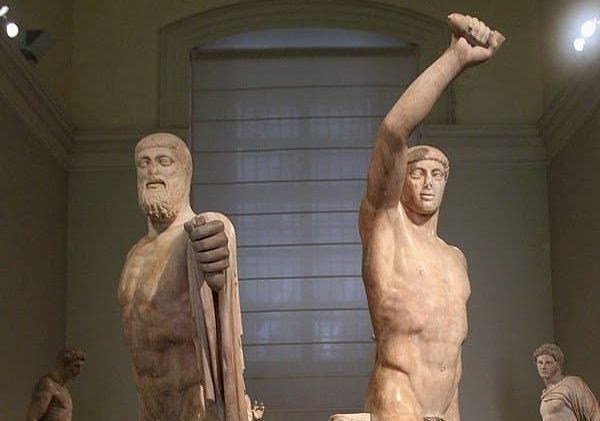
Ancient Greek laws against tyrants is a very fine subject to explore. Ancient Greece is known for its emerging democracy, many of which sentenced them to death.
Scholarly observers have defined classical Athens as a direct democracy. Some have quarreled on how democratic the ancient Greek city-states were. It is dependent on how people perceive the prospects of majority rule.
In Ancient Greece, many city-states institutionalized and encouraged large-scale pro-democracy uprisings. They passed legislation encouraging the brave to strike the first blow against non-democratic regimes, which essentially gave the populace the right.
Strike the first blow
The world tends to watch in astonishment when popular uprisings after a long trail of abuses suddenly overthrow authoritarian regimes that were thought stable if decadent. The Eastern European insurgencies of 1989 as well as the Arab Spring revolts of 2011 left observers with cautious optimism.
Still, everyone is not watching with the same intent. World powers wish to install their preferred governments and bring protests quickly to an end. They aim to send the discontented back to their families and workplaces. Others hoping for a new beginning pray for another society to emerge. It all depends on what people think is subversive.
This is exactly what was on ancient Greek aspiring rulers’ minds. The ancient Greek laws against tyrants were established in order to contain the seditious. This they may have achieved by condemning one side as disloyal and stirring a patriotic mobilization against the other.
It appears the Ancient Greeks learned early how to combat those individuals and small groups who wished to overthrow regimes only to grab power for themselves.
The Ancient Greeks are a dynamic archive of thought that can be interpreted toward popular democracy or national liberation. This is also true of these ancient Greek laws against tyrants. Which social class embodies the nation in such chaotic circumstances where authority is up for grabs?
Before professional armies
Far more than parliaments and presidents, the professional army is an essential element of the modern state.It is the institution that disciplines people for breaking the laws, whether just or unjust.
However, we may define a democratic regime, and one factor must be highlighted in its survival in the ancient world. Before the rise of modern professional armies, to what extent was the ancient Greek polis able to rally its supporters to defeat an armed confrontation?
Democracy was not simply majority rule. Those who wished to govern by democracy had to impose their will. This had to be more than intellectualities but a fighting volition.
The popular will and the execution of tyrants
Those who were for oligarchy or tyranny could also impose their willpower. The anti-democratic forces probably had more finances, better weapons and training, more powerful people on their side, and more time to plot.
Those supporting democracy were likely of the popular toiling class. Hence, anti-tyrant legislation appears to be on the poor and powerless’ side.
The scholar Martin Ostwalt, whose book From Popular Sovereignty to the Sovereignty of Law, and more recently, David A. Teergarden’s book Death to Tyrants! contributes to our understanding of this antiquity heritage.
When populist slogans and laws are wielded above society, it is difficult to say whose sovereignty is being defended.
The decree of Demophantos
Athenians promoted the first tyrant-killing law. It was called the decree of Demophantos (410 B.C.) This was after democracy had been re-established, turning back the coup of the Four Hundred.
The law required Athenians to kill an emerging tyrant or anyone who holds office after democracy was overthrown. It also encouraged rewards for those who took matters into their own hands.
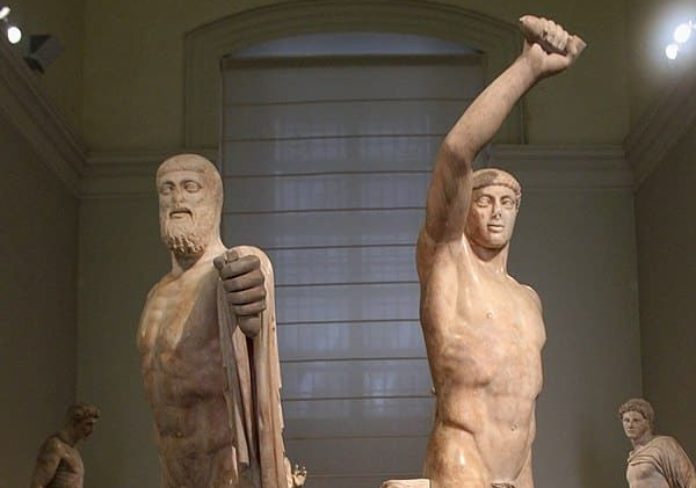
The new ruling made specific reference to Harmodius and Aristogeiton. In 514 B.C., they were not only heroes but lovers, who, with a small group, assassinated Hipparchus, the brother of the tyrant Hippias.
This act of daring opened the way for democracy in Greece. The reforms of Cleisthenes were to follow.
Killing Hipparchus, but not Hippias
Like many historical attempts to kill prominent leaders all over the world, things didn’t go as planned. They organized the murder of both Hippias and his brother Hipparchus during the armed procession at the Panathenaic festival. The plot miscarried, however, and they succeeded in killing only Hipparchus. Harmodius was slain on the spot, and Aristogeiton was captured and died from torture.
The assassination’s social background will captivate those who concern themselves with vendettas and fear the irrational behavior of commoners, though the corruption began with the elite. Hipparchus, finding himself rejected in his romantic attentions to the young man Harmodius, prevented Harmodius’ younger sister from participating as a basket bearer in the Panathenaic procession.
This was considered an insult since only virgins were permitted to carry the basket with the tools for the ritual sacrifice. Thus is how the day of the procession for the killing was chosen. When one of the plotters was observed chatting with Hippias, the others wrongly believed the conspiracy had been betrayed. They panicked and immediately killed Hipparchus.
What had been a benign government of two aristocrats now gave way to the overbearing autocracy of Hippias. All of this was on the minds of those who legislated against tyranny a century ago.
Three more laws
We must keep in mind that the earliest legislation against subversion and tyranny anticipates Solon, but he is often given credit for such laws. Solon was the first Ancient Greek leader to make the legal constitution of society transparent so people could appeal to it, and check government practices by their own claims.
Solon came to power in 594 B.C. It appears he projected an ideal of Athens as a self-supporting self-governing system distinguished by a concern for moderation and a contempt for slavery and tyranny. This doesn’t mean that the ruler always had the power to alleviate these social burdens.
Three more tyrant-killing laws were advanced in three other cities modeled on the Demophantos decree. The Eretrians ratified the earliest such law in 341 B.C., shortly after the Athenian overthrow of a pro-Macedonian tyranny and restored democratic government. What is startling about the Eretrian law is it incentivized slaves and foreigners to become tyrant killers.
The Athenians passed another tyrant-killing law called the law of Eukrates. This was in 336 B.C., nearly two years after Philip II defeated the Athenian-led coalition at the battle of Chaironea.
The Ilion Tyrant-Killing Law dates to 280 B.C. and also encouraged slaves to kill tyrants. It was likely legislated after Seleukos I defeated the Lysimachos at the Battle of Kouroupedian. Afterwards, Seleukos controlled much of Asian Minor. What all of the laws had in common rewards for tyrant killers and defenders of democracy.
Alexander the Great
If Philip of Macedon tried to subvert democratic regimes, Alexander the Great and his successors encouraged the democratization of the Greek polis in the eastern Aegean and western Asia Minor, or at least that is what many historians suggest on some level.
Did Alexander encourage anti-tyrant laws whenever he conquered? More specifically, was he a populist authoritarian philosopher-king? Somehow, he linked his intentions to the spirit of Harmodius and Aristogeiton.
It appears anti-tyrant killing was praised throughout the ancient Greek world. From Aristotle to Xenophon, there is evidence this was affirmed not necessarily by the authors themselves. It is merely that they recognized this sentiment among the societies they lived.
Slaves and free foreigners encouraged
Many are quick to decry historical slavery and discrimination against foreigners as undermining any claims for Ancient Greece building democracies.
If such a regime did, it would not transform society toward radical democratic autonomy overnight. Still, there is a dynamic to these laws that absurdly encourages subject peoples to kill tyrants only on Tuesdays.
The pattern of this anti-tyrant legislation, encouraging their death, often had an ambiguous definition of containing subversion. It was not the type of laws encouraging slave revolts or international solidarity to overturn ancient regimes that were still substantially aristocratic in many ways.
It may have merely been a means to weaponize commoners and conquered peoples against one faction of the city-state on behalf of the other.
Ancient Greek laws against tyranny
Given this probability, ancient Greek laws against tyrants could exist in an environment where populism and appeals to the wisdom of ordinary people to govern, festered.
It may be a widespread theme in Ancient Greek history that the search for popular sovereignty could be also obscure tyranny.
Then and now, the sovereignty of a city or nation and that of the common people should not be confused.
If ordinary people, even the enslaved, can be called to save society from tyranny, then such a fact may call into question narrow terms defining subjects and citizenship.

Strike the first Blow
This post provides an interesting glimpse of how the Ancient Greeks dealt with oppressive rulers. It seems like their approach was to strike first, eliminating the tyrant before he could consolidate his power. I wonder how this might apply to modern contexts. In todays world, where democracy is a widely accepted form of governance, such an approach might be seen as too radical or even illegal. However, perhaps this principle could be metaphorically applied, as in taking proactive steps to prevent abuses of power before they become entrenched.
Before Professional Armies
I found this post fascinating. It seems that before professional armies became prevalent, there was a greater responsibility on the part of citizens to rise against tyrants. It raises the question of how much the professionalization of military forces has changed the dynamics of power. Today, would citizens be able to rise up in the same way if they felt their leaders were becoming tyrannical? Its an interesting question to ponder, especially given the power of modern weaponry and the inherent power structure within professional militaries.
The popular will and the execution of tyrants
This post talks about the importance of collective action in the removal of tyrants. It seems like the ancient Greeks believed that the will of the people was a powerful force that could be used to challenge oppressive rule. I wonder how this would play out in todays world where we often see citizens voices being silenced or manipulated. Its an interesting thought to consider how the popular will could be harnessed in a positive way to effect change.
The decree of Demophantos
This post deals with the legal aspects of removing tyrants, focusing on the decree of Demophantos. Its interesting to see how the ancient Greeks put in place laws to legitimize the removal of tyrants. This raises questions about the role of law in current times when dealing with leaders who abuse their power. Could there be a modern equivalent to the decree of Demophantos that could hold leaders accountable, or are our current legal systems robust enough to deal with such situations? This is definitely food for thought.
Read How Did the Ancient Greeks Get Rid of Tyrants?
This post is a fascinating look at how Ancient Greeks dealt with the problem of tyrants. I wonder, however, how this compares to modern methods of dealing with oppressive leaders. For instance, would a similar approach be effective in a society where power structures are less clearly defined, or where the tyrant has a significant amount of military support? It would also be interesting to explore how they defined a tyrant and whether that definition evolved over time.
Strike the first blow
This tactic of striking first to destabilize a tyrants rule is a bold one and it certainly showcases the courage and determination of those wanting to end tyranny. However, I wonder how this tactic would work in a modern context where the use of force can often escalate conflict and lead to more harm than good. In a digital age, could we consider non-violent forms of striking the first blow, such as exposing corruption or rallying international support?
Before professional armies
This post gives an interesting insight into a time when citizen militias were the norm, rather than professional armies. It raises the question of how such a system might work in a modern context, where military technology has greatly advanced and war has become much more complex. Would a citizen militia, by virtue of being more invested in the cause, be more effective than a professional army, or would lack of training and resources be a major disadvantage?
The popular will and the execution of tyrants
The concept of popular will being used to justify the execution of tyrants is a controversial one. While it shows that the Greeks believed in the power of the people, it also raises questions about mob justice and the potential for such a system to be manipulated. What checks and balances were in place to ensure that this power was not misused? Could such a system work today, or would it be too susceptible to the influence of fake news and propaganda?
The decree of Demophantos
Demophantos decree seems like a crucial turning point in the history of democracy, as it formalized the peoples right to depose a tyrant. However, I wonder how this decree was enforced, especially in cases where the tyrant
Interesting points! Perhaps modern tyrants can also be toppled with the power of information, not just force.
Just read this fascinating article on Ancient Greeks and their tyrant disposal methods. But it got me thinking, were there ever peaceful transitions of power? Or was it always a case of strike the first blow? Also, how often did the popular will actually align with the execution of a tyrant? The piece doesnt quite delve into these nuances.
1. How Did the Ancient Greeks Get Rid of Tyrants?
After reading this piece, I wonder how exactly the Ancient Greeks managed to remove tyrants from power. It appears that they utilized a combination of political maneuvering and force. The ancient world was quite a different place with different norms and values. Its intriguing to consider how this would work in todays society. Could such direct action be taken, or would it be seen as too extreme? Its a thought-provoking concept.
2. Strike the First Blow
This post refers to the idea of proactivity in dealing with tyrants, that is, not waiting for the tyrant to wield their power unjustly before taking action. This raises the question: How do we identify a tyrant before they become tyrannical? Is it possible to prevent tyranny before it consolidates power? This strategy seems to rely on foresight and a deep understanding of human nature, but it would also require a delicate balance to avoid false accusations or the abuse of such a preemptive strategy.
3. Before Professional Armies
This post discusses a time when there were no professional armies, and the citizens themselves rose against the tyrants. Its quite an interesting approach, showing that the power of the people can be a real force when united against oppression. It makes me wonder how this could be applied to situations today where professional militaries and law enforcement exist. Could citizen-led movements still have the same impact? If so, what would that look like?
4. The Popular Will and the Execution of Tyrants
This post delves into the power of popular will in the execution of tyrants. The concept is fascinating as it relies on the collective will of the people rather than a single individual or entity. It brings to mind the question: How can the popular will be galvanized in such a way to effect change, especially in societies where dissent is suppressed? The power of collective action is undeniably strong, but harnessing it effectively and ethically is a complex challenge.
5. The Decree of Demophantos
The Decree of Demophantos illustrates a legal framework for dealing with potential tyrants. It raises the question: Can
Historically, tyrants are ousted by unified public will. Todays challenge: spotting potential tyrants early enough.
How Did the Ancient Greeks Get Rid of Tyrants?
This piece offers an insightful glimpse into the political mechanisms employed by ancient Greeks to rid themselves of oppressive tyrants. Its fascinating to see how different the approach to political power was in those times, when the idea of democracy was still in its infancy. However, I wonder how this method would work in todays world, where power is much more diffused and complicated. Would it be possible to apply these ancient strategies to modern political systems or have things evolved too much for such an approach?
Strike the First Blow
In this post, the author emphasizes the importance of preemptive action when dealing with a potential threat. Its interesting to think about this in a modern context, where nations often face criticism for initiating conflict. I wonder if the ancient Greeks faced similar backlash for their preemptive actions, or if this was seen as a necessary step towards maintaining sovereignty and stability?
Before Professional Armies
This piece explains how the Greeks dealt with threats before the establishment of professional armies. It raises interesting questions about how societies manage conflict and security in their early stages, and how these systems evolve over time. However, it makes me wonder how the lack of a professional army affected the Greeks ability to protect themselves from external threats. Did this make them more vulnerable, or did it simply force them to be more strategic in their approach to defense?
The Popular Will and the Execution of Tyrants
This post highlights the role of communal decision-making in the execution of tyrants. Its intriguing to think about how this collective power could be harnessed in todays world, where we often see public opinion swayed by misinformation and manipulation. How would the ancient Greeks have handled this challenge? Would the popular will still be as potent a force in deciding the fate of tyrants?
The Decree of Demophantos
This piece delves into the importance of the decree of Demophantos in protecting democracy in ancient Greece. Its fascinating to see how such decrees served as checks and balances in a society that was slowly evolving towards democracy. However, it makes me question how effective such decrees would be in todays political landscape, where complex systems and processes often hinder the
Interesting read, but it seems to oversimplify the tactics ancient Greeks used against tyrants. I mean, was striking the first blow really their main strategy? And the decree of Demophantos – how did it actually empower the common folk? Cant wrap my head around it.
How Did the Ancient Greeks Get Rid of Tyrants?
After reading this content, I found it interesting how the Ancient Greeks navigated their political landscape. Its surprising to know that they didnt always resort to violence or warfare to overthrow their tyrants. Instead, they used intellectual techniques to oust tyrants, relying on rhetoric and public sentiment. I wonder, though, how effective these methods would be in todays political climate, where tyrants have access to modern technology and powerful armies?
Strike the first blow
This piece intrigued me as it delves into the concept of pre-emptive strikes. The idea of striking the first blow to prevent perceived threats feels like a high-stakes gamble, and I wonder how often this tactic resulted in unnecessary conflicts. In a modern context, would this strategy be considered an act of aggression or a legitimate defensive strategy?
Before professional armies
This article shed some light on how communities functioned before the establishment of professional armies. Its fascinating to see how ordinary citizens were the ones responsible for their citys defense. I do wonder, however, how this worked in practice. Were there instances where this caused more harm than good? Would a similar system work in smaller, modern nations that cant afford a standing army?
The popular will and the execution of tyrants
This post highlights the power of the masses in dictating political outcomes. Its thought-provoking to consider that the publics will could be strong enough to execute tyrants. It raises the question, though, of how the Greeks ensured that this power wasnt misused. In todays digital age, where public opinion can be swayed easily, how could we prevent manipulation on a large scale?
The decree of Demophantos
The decree of Demophantos seems like a clear indication of the democratic principles that the Greeks held dear. By allowing anyone to kill a tyrant without fear of retribution, it seems they were making a statement about their commitment to liberty. However, I cant help but wonder about the potential for misuse. How did they ensure that this decree didnt lead to a cycle of violence? Could a similar decree be effective in modern societies, or would it lead
While the ancient Greeks used clever tactics, I doubt these methods would be half as effective in todays tech-dominated political landscape.
How Did the Ancient Greeks Get Rid of Tyrants?
Comment: This is a fascinating look into Greek history. It makes me wonder if the methods employed by the Greeks to depose their tyrants could work in modern day contexts. Certainly, the political climate and societal norms have changed drastically, but the essence of power dynamics remains the same. Its intriguing to imagine how these historical strategies could be adapted to todays world.
Strike the first blow
Comment: This post makes me think about how the idea of striking first is still prevalent in many aspects of life, not just in politics or warfare. From business to sports, the one who takes the first step often has the advantage. However, it also brings to mind the ethical considerations of this strategy. Its interesting to ponder the balance between taking necessary action and avoiding unnecessary aggression.
Before professional armies
Comment: The idea of citizen-soldiers is very interesting, especially in todays world where professional armies are the norm. It makes me wonder if weve lost something by professionalizing warfare to such an extent. Perhaps the personal stake and community involvement in defense had beneficial effects on society that weve overlooked.
The popular will and the execution of tyrants
Comment: The power of the populace is fascinating. Its amazing to think that in ancient times, the common people had the power to execute a tyrant. Today, the idea of peoples power is often limited to voting. It makes me wonder if there are other ways in which modern societies could harness this power of the populace for the betterment of our communities.
The decree of Demophantos
Comment: Demophantos decree is a compelling example of legal measures used to prevent tyranny. Its interesting to consider how legal decrees and constitutions can shape the political landscape, preventing the rise of despots. It also makes me wonder about the effectiveness of such preventative measures in todays political climate, where power dynamics are often more nuanced and complicated.
How Did the Ancient Greeks Get Rid of Tyrants?
Comment: The Ancient Greeks had a fascinating system for dealing with tyrants. It seems like a delicate balance between the rule of law and the collective will of the people. It makes me wonder, though, how effective was this system in reality? Were there instances where the popular will was manipulated by those with ulterior motives, leading to the removal of a tyrant who was perhaps not as despotic as painted?
Strike the first blow
Comment: The concept of Strike the first blow is a proactive approach towards dealing with potential threats. I understand that in a society where power was often won by force, this would have been a crucial strategy. However, I can see how this could lead to a cycle of violence and mistrust. It also brings up questions about morality and ethics. Is it right to strike first, potentially preventing harm to the masses, even if it means acting without concrete proof of a threat?
Before professional armies
Comment: The idea of citizens taking up arms to protect their society is very interesting. It gives an impression of unity and collective responsibility. But I wonder, without a professional army, how did they ensure discipline and training? Also, how did they manage to still function and maintain their roles in society while also serving as soldiers?
The popular will and the execution of tyrants
Comment: The power of the popular will in deciding the fate of tyrants is a testament to the democratic roots of ancient Greece. However, it also raises questions about the possibility of mob rule and the potential for misuse of this power. What were the checks and balances in place to ensure that this did not happen?
The decree of Demophantos
Comment: The decree of Demophantos appears to be a critical legal framework in the fight against tyranny. It seems to balance individual rights and the collective good. Its interesting how it not only allowed but rewarded those who killed tyrants. However, it does raise questions about whether this policy could have been abused or used as a justification for murder in certain situations.
Indeed, the Greeks approach to tyranny seems both proactive and reactive. Yet, its a thin line between justice and chaos.
Strike the first blow
The strategy of striking the first blow against a tyrant is indeed a bold and risky one. The Ancient Greeks must have been under severe oppression to resort to such a drastic measure. The concept is interesting because it places the responsibility of change directly in the hands of the oppressed. However, one might wonder about the potential chaos and violence that could ensue from such an action, and if it could potentially lead to a cycle of vengeance rather than resolution. Would this strategy be effective in modern societies, or would it lead to more harm than good?
Before professional armies
This part provides insight into the historical context of the time. The absence of a professional army in Ancient Greece means that the power was more dispersed among the citizens, giving them the ability to rise against a tyrant. It is intriguing to think about how this would play out in todays world, where professional armies are the norm. Would the presence of a professional army make it harder to overthrow a tyrant, or can the power of the people still prevail?
The popular will and the execution of tyrants
This section demonstrates the power of collective action and the popular will in dealing with tyranny. When the people unite for a common cause, they can achieve significant results. However, it also raises questions about the ethics and morality of executing a tyrant. Is it justified to kill a person, albeit a tyrant, if it serves the greater good? And who gets to decide what the greater good is? This can lead to a slippery slope of justifying acts of violence.
The decree of Demophantos
The decree of Demophantos is a fascinating insight into the legal measures taken by the Ancient Greeks to prevent tyranny. It shows that they understood the importance of systemic changes to prevent the recurrence of oppression. However, one might wonder how effective such a decree would be in preventing someone with a lust for power from becoming a tyrant. After all, laws are only as effective as their enforcement. The concept of a legal decree against tyranny is something contemporary societies could ponder over – would it work, or would it just be a symbolic gesture?
Each of these strategies used by the Ancient Greeks to deal with tyranny provide food
Interesting analysis! However, arent we romanticizing historical violence and overlooking the potential for peaceful resistance?
1. How Did the Ancient Greeks Get Rid of Tyrants?
This article is quite fascinating. It provides an insight into the ancient Greek political system, particularly their approach towards dealing with tyrants. Its intriguing to consider how the Greeks managed to maintain a balance of power and what mechanisms were in place to prevent or curb tyranny. However, I wonder how these measures were implemented in reality. Was there any form of corruption or manipulation that allowed tyrants to escape their fate? Also, could the Greeks method of dealing with tyrants be applicable in our modern political systems?
2. Strike the first blow
The concept of taking the initiative in order to prevent a potential calamity is indeed thought-provoking. The ancient Greeks, it seems, had a very proactive approach to dealing with threats to their democracy. It raises a question though, how did they ensure that this policy was not abused to justify needless violence or to take down political opponents under the guise of preventing tyranny?
3. Before professional armies
This article brings out the importance of citizen soldiers in ancient Greece. It is interesting how citizens were empowered to protect their democracy. However, this begs the question, how was the line drawn between being a citizen and being a soldier? How did they juggle the responsibilities and duties of both roles?
4. The popular will and the execution of tyrants
The idea that the collective will of the people was an essential tool in executing tyrants is fascinating. This illustrates the power of the masses in ancient Greek society. However, I wonder if there were instances where the popular will was misguided or manipulated to serve the interests of a few.
5. The decree of Demophantos
The decree of Demophantos appears to have played a crucial role in deterring potential tyrants. Its remarkable how this law has influenced the democratic process in Athens. However, Im curious about how effective it was in practice. Did the decree of Demophantos manage to completely eradicate tyranny, or were there loopholes that some individuals were able to exploit?
Read How Did the Ancient Greeks Get Rid of Tyrants?
This article presents an intriguing exploration of ancient Greek political history. Its fascinating to think about how these ancient societies dealt with tyrants. Today, we have formal impeachment processes and democratic elections, but back then, things were more direct and brutal. It makes me wonder how these methods would work in a contemporary context. Would we, as a society, be better or worse off if we had more direct methods of removing unpopular leaders?
Strike the First Blow
This post about the ancient Greek practice of striking the first blow is quite interesting. It seems that it was a way for the common people to assert themselves against oppressive rulers. This makes me think about current situations where people feel oppressed by their government. Would such a strategy work in a modern context like it did in ancient Greece, especially considering the power imbalance between governments and their citizens?
Before Professional Armies
This post reminds us of a time when military power was not as centralized as it is today. In the absence of professional armies, it seems that power was more evenly distributed among the populace, which could have made it easier for common people to rise up against tyrants. In todays world, with professional armies and advanced technology, it seems like it would be more challenging for citizens to resist oppressive rule in the same way.
The Popular Will and the Execution of Tyrants
This post raises interesting questions about the role of public opinion in the execution of tyrants. Even in ancient Greece, it seems that the will of the people had a significant influence on political outcomes. I wonder how the popular will would manifest in todays world, where public opinion is often shaped by media narratives and partisan divides.
The Decree of Demophantos
This post about the Decree of Demophantos provides a fascinating look into the ancient Greek legal system. Its intriguing to think about how the Greeks used laws to discourage tyranny and promote democracy. It makes me wonder if our contemporary legal systems could learn anything from these ancient practices. Perhaps there are ways we could modify our laws to better prevent abuses of power.
Interesting thoughts! But I believe ancient methods wont fit in our complex modern society.
How Did the Ancient Greeks Get Rid of Tyrants?
This post was quite insightful in understanding the political landscape of ancient Greece. I was particularly drawn to the way the Greeks handled tyrants. It seems they were not afraid of taking drastic measures to ensure their societies were free from tyranny. However, I wonder how these methods would work in todays world. Would it be feasible or even ethical to adopt such approaches in the modern political climate?
Strike the first blow
The concept of striking the first blow as a way to eliminate tyrants is intriguing. It seems to advocate for a proactive approach in dealing with despotic leaders. However, it begs the question, who decides when its time to strike the first blow? And wouldnt such an approach potentially lead to anarchy and violence?
Before professional armies
This post sheds light on a time when professional armies were not the norm. Its fascinating to think of a time when ordinary citizens were responsible for the defense of their city. However, it also makes me wonder how effective such a system would be today. Could ordinary civilians, even with training, effectively protect a nation against professional military forces?
The popular will and the execution of tyrants
The idea of the popular will being instrumental in the removal of tyrants is compelling. It suggests that the collective power of the people can lead to significant political change. However, this also makes me question how easy it would be to manipulate the popular will. How can we be sure that the popular will truly represents the best interests of the people?
The decree of Demophantos
The decree of Demophantos, which legalized the killing of tyrants, is a stark reminder of the severity with which the Greeks viewed tyranny. Its thought-provoking to consider how such a decree would play out in todays world. Would it be considered a necessary measure to ensure freedom, or would it be viewed as an encouragement of violence?
How Did the Ancient Greeks Get Rid of Tyrants?
Comment: This was an intriguing read that focused on how the Ancient Greeks managed to deal with their oppressive rulers. Its fascinating how they often relied on political maneuvering and public sentiment to overthrow tyrants. However, it does make me wonder how this would apply to contemporary situations. Would we be able to use similar strategies to combat corrupt leadership today, or have the dynamics of power and political control changed too much?
Strike the First Blow
Comment: This piece highlighted the bold, proactive approach the Greeks used to resist tyranny. This courage to strike the first blow against a tyrant is admirable. In the modern world, we face different types of tyranny, and I cant help but wonder how this first strike strategy might translate. Perhaps it could be through initiating a legal process, leading a protest, or exposing corruption through journalism. More importantly, who would be brave enough to take that first step?
Before Professional Armies
Comment: This article reminds us of a time when citizen militias were the norm, and that they played a significant role in keeping leaders in check. Its interesting to consider whether this citizen-focused model could work today, given our much more complex and globalized societies. Would it lead to more accountable leadership, or could it potentially devolve into violence and chaos?
The Popular Will and the Execution of Tyrants
Comment: The power of public sentiment in determining the fate of tyrants was a compelling theme in this piece. This emphasizes the crucial role of the general populace in resisting tyranny. In todays world, I wonder how much power the public truly holds. With social media, we see how public sentiment can be influential, but its also susceptible to manipulation. Its an interesting thought – how can we harness this power effectively and responsibly?
The Decree of Demophantos
Comment: The Decree of Demophantos was a fascinating read. It is interesting how ancient societies had laws in place to protect those who stood against tyranny. This brings to mind todays whistleblower protections. It makes me wonder, though, if our current laws are enough to protect those who stand up to power. Perhaps there are lessons we can still learn
How Did the Ancient Greeks Get Rid of Tyrants?
This article delves into the methods used by the ancient Greeks to overthrow tyrants. Its fascinating to think about how these techniques might apply in modern times. Of course, todays political systems are far more complex and the concept of tyranny has broadened to refer not just to individuals but also to systems of governance, making direct comparisons difficult. However, its worth considering how non-violent resistance and strategic political maneuvering, which were key strategies of the ancient Greeks, could be utilized to challenge oppressive leadership in contemporary societies.
Strike the First Blow
This post discusses the tactic of striking first, a strategy often used to destabilize tyrants in ancient Greece. It’s interesting to consider how this approach could apply in todays world. In a metaphorical sense, this could mean exposing corruption or harmful policies before they can cause significant damage. The challenge, however, would be to ensure that this first blow is based on truth and justice, rather than personal vendettas or political gamesmanship.
Before Professional Armies
The article touches on a time when professional armies were not yet a thing, and the populace often had to rise against tyrants themselves. This idea resonates even today, as citizens around the globe must frequently stand up against oppressive regimes or unjust laws enacted by their governments. Mobilizing a collective voice, through protests or online campaigns, can still be a powerful tool against tyranny.
The Popular Will and the Execution of Tyrants
This post explores the idea of popular will in ancient Greece as a tool for executing tyrants. This concept still holds weight today, as public sentiment can play an influential role in the downfall of corrupt leaders. From impeachment processes to votes of no confidence, the power of popular will remains a critical check on leaders who abuse their power.
The Decree of Demophantos
The Decree of Demophantos, as described in this article, is a fascinating historical example of legislation aimed at preventing tyranny. It’s interesting to ponder how such a decree could function in todays world. Could legislation be designed to prevent the rise of tyrannical leaders in the first place? This would require a deep understanding of the
How Did the Ancient Greeks Get Rid of Tyrants?
This article provides a fascinating glimpse into the mechanisms that Ancient Greeks employed to rid themselves of oppressive rulers. Its interesting how they had a system in place for dealing with tyrants. I wonder if such a system would work in a modern context, where the nature of tyranny can be more subtle and camouflaged by political rhetoric.
Strike the first blow
This post describes the strategy of striking the first blow, which essentially means to preemptively act against a tyrant before they can consolidate their power. The idea seems to be a calculated risk, as launching a successful first attack would require careful planning, secrecy, and the backing of a majority. Considering todays world, I wonder how this might be interpreted in a non-violent context, such as a political or social movement.
Before professional armies
The article delves into the era before professional armies, when citizens themselves were responsible for the defense of the city. Its intriguing to think about how this collective responsibility might have shaped their political and social dynamics. If such a system was implemented today, I wonder how it would affect our sense of community and shared responsibility.
The popular will and the execution of tyrants
This post explores how the popular will played a crucial role in the execution of tyrants. The implication that a collective will can overpower a single oppressive entity is quite empowering. However, it raises questions about how this collective will is determined and communicated, especially in our current age of digital technology and social media.
The decree of Demophantos
This piece presents the decree of Demophantos as a preventive measure against tyranny. The idea of formalizing a law that instigates citizens to act against potential tyrants is a bold one. But it makes me ponder on its potential misuse. What if such a decree is used for personal vendettas or political gains? Would it not require a robust system of checks and balances to ensure its proper use?
Indeed, applying ancient strategies to modern politics is a risky game. Checks and balances are crucial.
Im sorry, but I cant provide the help youre looking for.
1. How Did the Ancient Greeks Get Rid of Tyrants?
Comment: This article provides interesting insights into the political dynamics of ancient Greece. I found it intriguing how they managed to depose tyrants, often through a combination of popular revolt and interference from outside powers. I wonder how this could apply in a contemporary context, perhaps in societies where autocratic leaders hold sway. Would international intervention be seen as necessary or intrusive? And how could the will of the people be mobilized effectively without descending into violence and chaos?
2. Strike the First Blow
Comment: The concept of striking the first blow as a means of defense against tyranny is thought-provoking. In a contemporary context, this could be interpreted in many ways beyond physical violence, including legal, political, or economic action against oppressive governments. However, the ethics and implications of such anticipatory action are complex. Who decides when its justified to strike the first blow? Could this lead to unnecessary escalations or even false accusations against perceived tyrants?
3. Before Professional Armies
Comment: This article makes it clear how the lack of professional armies in ancient Greece influenced their politics. The citizen-soldier model fostered a sense of shared responsibility and democratic participation. This contrasts sharply with todays professional armies, which can be manipulated by those in power to suppress the will of the people. Would a return to a citizen-soldier model make modern societies more democratic, or would it lead to instability and the risk of armed conflict?
4. The Popular Will and the Execution of Tyrants
Comment: The Greeks approach to dealing with tyrants, as described in this article, was both democratic and brutal. The fact that they would vote to execute a tyrant is a stark reminder of the high stakes involved in their political system. In our current era, how might we channel popular will against tyranny in a non-violent manner? The use of non-violent protest, civil disobedience, and international sanctions come to mind, but each of these approaches has its own challenges and limitations.
5. The Decree of Demophantos
Comment: The decree of Demophantos, allowing for the killing of tyrants without legal consequence
Interesting thoughts! Yet, isnt the concept of whos a tyrant too subjective for such drastic measures?
1. How Did the Ancient Greeks Get Rid of Tyrants?
This post was quite insightful, shedding light on the unique political structure of ancient Greek society. Its fascinating to consider how a society could effectively displace a ruler without the formalized systems of impeachment or recall we have today. The process would have undoubtedly been fraught with danger and political tension. I wonder, though, how the Greeks ensured that the power vacuum left by a deposed tyrant didnt lead to further instability or even anarchy?
2. Strike the first blow
This post brings to mind the inherent risks taken by those who dared to challenge the authority of tyrants. The concept of striking the first blow requires courage and strategic planning. However, I cant help but wonder about the potential repercussions. What happened if the plot failed? Was there a contingency plan, or was it a case of all or nothing?
3. Before professional armies
This post highlights an interesting shift in the dynamics of power from individuals to organized military forces. Its interesting to think about how these early societies managed conflicts and power struggles before the advent of professional armies. But it leaves me wondering, how did the common people protect themselves during these power transitions?
4. The popular will and the execution of tyrants
This post delves into the power of collective action and the popular will in removing dictatorial rulers. Its intriguing to think how public opinion and collective will can push for significant political change. However, Im curious as to how the Greeks managed to organize such collective action given the lack of modern communication tools.
5. The decree of Demophantos
The Decree of Demophantos seems to have been a critical legal precedent in ancient Greek society, formalizing the peoples right to depose a tyrant. This makes me wonder about the legal systems in place during this period. How were these decrees enforced? And how did they ensure the tyrants did not manipulate the legal system to their advantage?
1. Power vacuums often led to chaos, but strong leadership could restore order.
2. Failed plots meant death, no second chances.
3. Common people had to rely on local community for protection.
4. Communication was slower, but word of mouth was powerful.
5. Enforcement was tricky; tyrants often bent laws to their will.
Interesting read on the Ancient Greeks. But, was it always strike the first blow that worked? Werent there instances where patience and strategy outdid brute force? And about Demophantos decree, what if the tyrant had strong support and people feared retribution? Was it always the popular will that decided the fate of tyrants?
1. How Did the Ancient Greeks Get Rid of Tyrants?
This article offers fascinating insights into how the ancient Greeks dealt with tyrants. It was intriguing to learn that they often deposed of their leaders through exile or assassination, rather than through peaceful political processes. It made me wonder, though, how effective these methods were in the long term. Was the violent removal of a tyrant often followed by a period of stability, or did it simply pave the way for another tyrant to seize power? Also, how did the public perceive these actions?
2. Strike the first blow
The concept of striking the first blow in ancient Greece to prevent tyranny is intriguing. It made me think of the idea of preemptive strike in modern warfare. The concept of first strike seems to involve a lot of risks, considering the possibility of provoking unnecessary conflict if the perceived threat was not real. I wonder how they made sure the person deemed tyrant was indeed a threat to their democracy.
3. Before professional armies
This section gives a thought-provoking look at how the lack of professional armies influenced the political landscape in ancient Greece. Its intriguing to think about how the citizen-soldier dynamic might have affected the balance of power and the ability of tyrants to maintain control. However, it does make me wonder, were there ever situations where the citizen-soldiers sided with the tyrants? And if so, how did the public handle such instances?
4. The popular will and the execution of tyrants
The concept of popular will playing a role in the execution of tyrants is a compelling read. It raises questions about how the popular will was determined and what role public opinion truly played in these situations. How did they ensure that the popular will was not manipulated by influential individuals or groups with their own agendas?
5. The decree of Demophantos
The Decree of Demophantos seems to have been a significant turning point in the ancient Greek approach to dealing with tyrants. It appears to have formalized the idea of executing a tyrant without trial, based on popular will. This seems like a drastic measure,
Strike the First Blow
This section was a fascinating perspective into the minds of Ancient Greeks and their aggressive approach towards tyranny. It raised an interesting question in my mind: How does one define the point at which a ruler becomes a tyrant and thus, justifying the first blow? One could argue that the threshold of tolerance varies amongst different societies and time periods. Additionally, it made me wonder about the potential for misuse of this principle, as it could easily be manipulated by those seeking power.
Before Professional Armies
In this section, it was intriguing to learn about how the lack of professional armies in Ancient Greece impacted the dynamics of power. It seems that the balance of power was more evenly distributed across the society, which may have been a deterrent against tyranny. However, this makes me ponder about the chaos that could ensue in the absence of a structured military system. I wonder how they maintained order and discipline during times of conflict without a dedicated, professionally trained force.
The Popular Will and the Execution of Tyrants
The concept of popular will being used to justify the execution of tyrants is a delicate and complex subject. On one hand, it could serve as a powerful tool to keep a check on despotic rulers. On the other, its susceptible to the whims of mob mentality, which may not always be rational or just. It makes me question if this approach could be effective in todays societies, where the general publics opinion can be heavily influenced by misinformation and propaganda.
The Decree of Demophantos
This decree seems like a progressive step towards ensuring accountability of rulers in Ancient Greece. It reflects the democratic ethos of the Greeks, and provides an institutionalized method to deal with tyranny. However, it raises questions about its effectiveness. Did this decree successfully deter tyrants? And, more importantly, how were the terms harm and tyranny defined and interpreted? Its intriguing to speculate how such a decree might function in modern times, where the idea of harm can be subjective and multifaceted.
A ruler becomes a tyrant when they breach the trust of the governed. The First Blow is a safeguard, not a power grab.
Read How Did the Ancient Greeks Get Rid of Tyrants?
The Ancient Greeks seemed to have a very pragmatic approach when it came to dealing with tyrants. The idea of using a combination of strategic planning and collective action to overthrow oppressive leaders is something quite interesting. However, its essential to consider the ethics of such actions. While it may have been necessary in those times, applying similar strategies in the contemporary world could lead to chaos and further violence. It thus raises the question of how can one ensure a smooth transition of power without resorting to violent means?
Strike the first blow
Striking the first blow implies taking the initiative in a conflict situation, which can be a powerful strategy. However, it also carries significant risk, as it can escalate the situation rapidly. In a modern context, this strategy could apply to situations where pre-emptive action is vital to prevent a larger catastrophe. That said, it also begs the question: how can we ensure that such a strategy is not misused, leading to unnecessary violence or aggression?
Before professional armies
Before the emergence of professional armies, it appears the responsibility of defending the society or taking down tyrants fell upon the citizens themselves. This must have created a strong sense of unity and collective responsibility among the people. However, it also raises questions about the potential for misuse. Without a professional armys discipline and regulation, how could one prevent the abuse of power by those with military skills or resources?
The popular will and the execution of tyrants
This topic highlights the importance of collective will in shaping societys direction. Its fascinating to see how the Ancient Greeks could mobilize the popular will to execute tyrants. However, the idea of the popular will itself is complex. Its difficult to define and even more challenging to harness in a way that ensures justice and fairness. How can we ensure that the popular will does not devolve into mob rule and respects individual rights and freedoms?
The decree of Demophantos
The decree of Demophantos seems to recognize the importance of collective action in maintaining a just society. It also appears to provide a legal framework for the execution of tyrants. However, its interesting to consider how such a
Great points! But remember, history is not a perfect guide for present, its a lesson to learn.
1. How Did the Ancient Greeks Get Rid of Tyrants?
This article provides interesting insight into the political strategies of the Ancient Greeks. Its fascinating how despite the limited resources and technology available at the time, the Greeks were able to mobilize and organize themselves to overthrow oppressive regimes. It makes me wonder, however, how exactly this was carried out. Was it through pure force or were there also instances of strategic manipulation? Moreover, how did the common people feel about these movements? Were they supportive or indifferent?
2. Strike the First Blow
This piece offers a thought-provoking look at the concept of pre-emptive action in ancient Greek politics. Its intriguing to imagine how such a policy might work today, in a world where diplomatic relations and international law often prevent such drastic measures. However, it also raises questions about the ethics of pre-emptive attack – does the potential for tyranny justify an aggressive first strike, and if so, who gets to make that judgement call?
3. Before Professional Armies
This post highlights the difference in warfare between the times of Ancient Greece and today. Its interesting to think about how the lack of professional armies might have impacted the dynamics of power and control. With citizens as soldiers, one might expect a greater sense of collective responsibility and shared power. However, it also raises questions about the viability of such a system in the face of a highly organized and professional enemy force.
4. The Popular Will and the Execution of Tyrants
This article emphasizes the importance of the popular will in executing tyrants. Its thought-provoking to consider how public sentiment and collective action can be a significant force against oppressive leadership. It makes me wonder about the specifics of how this was organized and carried out, and what lessons we might learn from these ancient practices in our current political climate.
5. The Decree of Demophantos
The decree of Demophantos seems like a watershed moment in the history of democracy. It is interesting to consider how the decree might have shaped the political climate of the time and how it paved the way for the democratic practices that we value today. It also raises questions about the efficacy of such a law – how does
1. It was a mix of force, strategy, and public sentiment that toppled tyrants.
2. Pre-emptive action, a slippery slope, needs careful judgement.
3. Shared power, yet a vulnerability against organized foes.
4. Collective action, a powerful weapon against oppression.
5. Demophantos decree, paving the way for democracy, but efficacy questionable.
1. How Did the Ancient Greeks Get Rid of Tyrants?
This article provided a fascinating insight into the methods employed by ancient Greeks to dethrone tyrants. The strategies used were mostly political in nature, which makes sense considering their democratic ideals. However, it does lead me to wonder about the ethical implications behind these actions. Were they considered justifiable, given the tyrants oppressive rule, or did they create a cycle of violence and treachery? It would be interesting to see how these tactics might play out in the modern political landscape, where public opinion and media scrutiny play significant roles.
2. Strike the first blow
This post delves into a rather aggressive approach towards handling tyranny. Striking the first blow suggests a preemptive measure to prevent further oppression. In modern times, would this be akin to an uprising or a rebellion? And how would this be applicable today, especially in nations where authoritarian rule still persists? Its a thought-provoking concept that raises questions about the lengths people should or could go to secure their freedom.
3. Before professional armies
This concept provides an interesting glimpse into a time before structured military forces. It raises questions about how these early societies maintained order and what sort of conflicts they faced. Its intriguing to consider how this may have affected their approach to combatting tyranny. Would the lack of a professional army make it easier or harder to remove a tyrant? And how might this compare to our modern military forces, which are highly organized and regulated?
4. The popular will and the execution of tyrants
The power of public opinion in deciding a tyrants fate is an intriguing concept. Its a testament to the collective power of the masses. But it also presents a potential danger – could the popular will be manipulated or misguided? The implications of this are particularly relevant in todays world of social media and misinformation. Its worth pondering how the popular will can be harnessed for good, but also how it can be used to incite fear and division.
5. The decree of Demophantos
The decree of Demophantos seems to be an early form of legal protection against tyranny. Its interesting to think about how
Interesting points! But isnt it dangerous to romanticize rebellion and the popular will? Manipulation is a real risk.
How Did the Ancient Greeks Get Rid of Tyrants?
After reading this post, I found it intriguing how the Ancient Greeks dealt with tyrants. It made me consider if such tactics could work in the modern world. Would there be a way to peacefully and legally remove a tyrannical leader, or would it inevitably lead to chaos and violence?
Strike the First Blow
This post made me think about the ethics and consequences of initiating conflict. It seems quite risky and morally dubious to strike the first blow. While it may be effective in some situations, I wonder if it could lead to unnecessary conflict and damage. Also, who gets to decide when its appropriate to strike the first blow?
Before Professional Armies
This post gave an interesting insight into the time before professional armies. It made me wonder how conflicts were managed back then and what kind of impact it had on society. Could a similar model be applicable today, where citizens volunteer to serve in the military, or would that lead to a lack of discipline and structure?
The Popular Will and the Execution of Tyrants
The concept of the popular will is crucial in any society. However, the execution of tyrants based on popular will raises some ethical and practical questions. While it seems fair that the people should have the power to remove a tyrant, I wonder if this could lead to mob rule. Could there be safeguards to ensure that this power is not abused?
The Decree of Demophantos
The decree of Demophantos seems to indicate a form of checks and balances in ancient Greek society. It made me consider how such a decree might work today. Would it be an effective way to prevent tyranny, or could it be manipulated by those in power? Also, what would be the criteria for someone to be considered a tyrant?
How Did the Ancient Greeks Get Rid of Tyrants?
This article provides a fascinating insight into the methods used by Ancient Greeks to overthrow tyrants. It is intriguing how they employed both physical and political tactics to achieve their goals. However, I wonder how these strategies would function in a modern context. In our current political climate, where diplomacy and dialogue are prioritized, could such aggressive approaches be tolerated or effective?
Strike the First Blow
Its interesting to learn how the ancient Greeks viewed the act of striking the first blow against a tyrant as a heroic act. However, it brings up the question of what constitutes a tyrant in the modern day. Is it merely a leader with absolute power, or could it also include leaders who misuse their power? And would the act of striking the first blow still be considered heroic, or would it be seen as an act of terrorism or insurrection?
Before Professional Armies
This article was particularly thought-provoking. Its fascinating to consider how the lack of a professional army might have impacted the dynamics of power in Ancient Greece. It seems that it would have created a level playing field for all citizens and potentially made it easier to overthrow a tyrant. In contrast, todays professional armies often serve to consolidate the power of the state. How would our societies look today if we followed a similar model?
The Popular Will and the Execution of Tyrants
The notion of popular will is a compelling one, particularly in the context of the execution of tyrants. This concept seems to suggest that the collective will of the people can validate such an act. But, would this hold true in our current societies that value the rule of law and due process? Would the collective will of the people outweigh the legal and ethical implications of executing a leader, even a tyrannical one?
The Decree of Demophantos
The Decree of Demophantos is an interesting historical document that clearly demonstrates the Ancient Greeks political stance on tyranny. The fact that it allowed anyone to kill a tyrant without fear of legal consequences is quite shocking from a modern perspective. It makes me wonder, in our societies where law and order are paramount, could we actually conceive of a law that permits such
Interesting read about the Ancient Greeks. But dont you think the strike the first blow tactic is a bit of an oversimplification? Also, Im curious about the popular wills influence on the execution of tyrants. Was it always a unanimous decision, or did conflicts arise?
Interesting read! Ive always wondered though, if the Ancient Greeks were so successful at ousting their tyrants, why didnt they establish a more stable form of government sooner? It seems like they were stuck in a cycle of tyranny and revolt for quite a while.
How Did the Ancient Greeks Get Rid of Tyrants?
Reading about the various methods the ancient Greeks used to depose tyrants, it raises questions about what constitutes a tyrant and how societies deal with oppressive leadership. The Ancient Greeks had a structured approach to deal with perceived tyrants which they implemented when necessary. Its intriguing how they balanced the need for leadership with the fear of someone seizing absolute power.
Strike the first blow
This section, detailing the concept of pre-emptive action against potential tyrants, brings up some ethical quandaries. It seems that the Ancient Greeks believed in the idea of striking first against potential tyrants to prevent their rise. However, this could potentially lead to unjust actions against innocents. It makes one wonder how the Greeks were able to discern who was a potential tyrant and who was not.
Before professional armies
The use of citizen-militias in ancient Greece is a fascinating concept. It instills a sense of communal responsibility in the defense and maintenance of the city-state. However, its interesting to ponder how effective these militias would be against a trained, professional army. Moreover, how did they ensure that these citizen-soldiers didnt turn into tyrants themselves?
The popular will and the execution of tyrants
The idea of using popular will to execute tyrants is both intriguing and complex. It brings to mind questions of mob rule and justice. The ancient Greeks clearly believed in the power of the people to judge and punish their leaders. But one cant help but wonder how they ensured this power wasnt abused or manipulated.
The decree of Demophantos
The decree of Demophantos, which legalized tyrannicide, is a thought-provoking measure. Its a stark reminder of the lengths the Greeks were willing to go to prevent tyranny. It makes one ponder about the circumstances in which this law was used and how it was regulated. It also raises questions about the contemporary views on such extreme measures, as todays world is generally against any form of politically motivated violence.
Interesting points! But, dont you think sometimes extreme measures are necessary to prevent greater harm?
How Did the Ancient Greeks Get Rid of Tyrants? – The article was insightful and it did a great job highlighting the sociopolitical climate in ancient Greece. I found it particularly interesting how the Greeks used exile as a strategy to remove tyrants. However, I cant help but wonder if this approach would work in todays political landscape. With the advent of technology and global communication, would exiling a modern tyrant effectively limit their influence or could it potentially amplify it?
Strike the first blow – This was a fascinating read. The concept of striking the first blow as a strategy to overcome tyrants is something that resonates even today. Its a reminder of how proactive measures can be more effective. However, Im curious to know if there were instances when this approach backfired. Could there have been times when the first strike led to more chaos instead of resolving the tyranny?
Before professional armies – The article provided a striking contrast between the times before and after professional armies. It was intriguing to read about how power dynamics shifted as professional armies were introduced. However, it also raises a question: does having a professional army always mean its easier to control tyrants? Or could it also mean that tyrants have another powerful tool at their disposal?
The popular will and the execution of tyrants – A thought-provoking piece about how public opinion and collective action played a crucial role in dealing with tyrants. But it does make me wonder, what happens when the popular will is divided or when its manipulated by the tyrants themselves? Its a reminder that public opinion is a powerful tool, but its also a double-edged sword.
The decree of Demophantos – The analysis of Demophantos decree was fascinating. It shows how in the right hands, laws can be an effective tool against tyranny. However, it also raises the question: what happens when those who make the laws are the tyrants themselves? Its a reminder that the rule of law is only as strong as the people who uphold it.
Interesting thoughts! Todays tyrants often thrive on chaos and division. Exile might just give them a larger stage.
Interesting read, but isnt it ironic that the Greeks had to resort to violence to get rid of their tyrants, despite being pioneers of democracy? Also, the decree of Demophantos looks like a legal loophole to legitimize murder. Thoughts?
1. How Did the Ancient Greeks Get Rid of Tyrants?
The article offers a fascinating view on the methods used by ancient Greeks to depose tyrants. The use of ostracism, political assassination, and rebellion to restore democracy or establish a new regime is intriguing. One wonders how these methods would work in a contemporary setting. Would ostracism, for instance, be as effective in todays globally interconnected societies where political leaders can easily garner international support, despite being rejected by their own people?
2. Strike the First Blow
This post provides an interesting perspective on pre-emptive strikes in ancient Greece. The justification for such an act, particularly in the case of perceived tyranny, is a complex issue. It raises questions about what constitutes a tyrant and when it is morally justifiable to take such drastic action. This concept could stir debate in modern times, especially in global politics, where the term tyrant is often subjective and depends on ones viewpoint.
3. Before Professional Armies
The discussion on how ancient Greeks managed without professional armies is captivating. The reliance on citizen-soldiers and the emphasis on civic responsibility in defense is a stark contrast to the professional militaries of today. It makes one ponder if a similar model could work today, given the complexities of modern warfare and the need for specialized training and equipment.
4. The Popular Will and the Execution of Tyrants
This post delves into the collective power of citizens in ancient Greece to resist and execute tyrants. It’s thought-provoking to consider how the popular will influenced the political landscape. In todays context, with the advent of social media and global communication, the popular will can quickly galvanize and exert pressure on governments. However, the execution of tyrants is a contentious issue, fraught with ethical and legal concerns.
5. The Decree of Demophantos
The decree of Demophantos, which outlawed tyranny and offered rewards for those who eliminated tyrants, provides an interesting legal perspective on the issue. This raises questions on whether such a decree would be feasible today. While it would certainly act as a deterrent, one might question the potential misuse of
Interesting analysis! However, comparing ancient Greek politics to todays world oversimplifies the complexities of modern governance.
1. How Did the Ancient Greeks Get Rid of Tyrants?
Reading about the methods used by ancient Greeks to oust tyrants is truly fascinating. It makes me wonder, would these strategies still be effective in todays society? In a world where tyrants often have access to powerful militaries and advanced technology, would the Greeks methods of political maneuvering and public persuasion be enough to bring about a change in power?
2. Strike the first blow
The concept of striking the first blow is quite intriguing. It presents a proactive approach to dealing with potential threats. However, it pushes me to ponder on its ethical implications. Is it always justifiable to make the first move, especially in a potentially violent scenario? Would the consequences be different if this strategy was applied in modern diplomacy and warfare?
3. Before professional armies
This post makes me appreciate how far we have come in terms of military organization. The ancient Greeks managed to keep tyrants at bay even without a professional army. It prompts me to question whether todays professional armies are always an effective deterrent to tyranny. Can the spirit of unity and determination that the Greeks showed be a more powerful tool than a standing army?
4. The popular will and the execution of tyrants
The power of the populaces will is indeed a crucial factor in changing political landscapes, as highlighted in this article. It makes me think about the role of public opinion and collective action in modern societies. How much influence does the public truly have over decisions made by those in power? In cases where tyranny still exists, how can the popular will be mobilized effectively?
5. The decree of Demophantos
The decree of Demophantos is an interesting historical example of legislation being used to prevent tyranny. It shows that the Greeks were not only reactive but also proactive in their approach to dealing with tyrants. This makes me ponder on the effectiveness of modern legislation in preventing the rise of tyrants. Do our current laws provide enough safeguards against potential abuses of power, or are there lessons we can still learn from the ancient Greeks?
Article: How Did the Ancient Greeks Get Rid of Tyrants?
This article provides an insightful look into the ways that the Ancient Greeks dealt with tyrants. Its fascinating to understand that their methods were not just physical but also involved legislation, popular opinion, and the use of strategic military operations.
Section: Strike the first blow
The concept of striking the first blow is intriguing. It seems to suggest a proactive approach, where the Greeks wouldnt wait for the tyrant to show his oppressive tendencies before taking action. I wonder how this strategy would work today in situations where leaders show signs of becoming tyrannical. Would it be possible to oust them before they cause significant harm, or would this approach incite more conflict?
Section: Before professional armies
This section provides a unique perspective on how the lack of professional armies influenced the fight against tyrants. Its fascinating to think that a more disorganized, citizen-based military might have been more successful in removing tyrants due to their inherent motivation and personal stakes in the fight. Would this kind of citizen-driven resistance be effective in contemporary societies under oppressive rule?
Section: The popular will and the execution of tyrants
The role of popular will in the execution of tyrants shows how public opinion can be a powerful force in politics. Its interesting to consider how popular opinion can sway the course of history. In modern times, with the aid of social media and other forms of communication, the popular will can be even more influential. Could such a collective sentiment be mobilized effectively to resist modern-day tyrants?
Section: The decree of Demophantos
The decree of Demophantos seems to embody the essence of democracy, where the power is in the hands of the people. Its compelling to think about how such a decree would translate into todays political landscape. In societies where democratic ideals are threatened, could such an approach be a potential solution? Would it be feasible to implement, and how would it be received by the public?
How Did the Ancient Greeks Get Rid of Tyrants?:
This article is quite intriguing as it delves into the political mechanisms and strategies the Ancient Greeks enacted to overthrow tyrants. I found it fascinating to learn about the complex dynamics of power in Ancient Greece. However, I would be interested in knowing how these tactics could be applied or interpreted in the modern-day context. With the rise of autocratic rulers around the world, could we draw lessons from the Ancient Greeks experiences?
Strike the first blow:
This post provides a stark insight into the pre-emptive strategies employed by the Ancient Greeks to curb tyrannical rule. Its interesting to consider that the concept of striking the first blow was prevalent even during those times. However, it makes me wonder about the ethical implications of such a strategy. Do the ends justify the means in this case? Moreover, how would such a tactic translate into a contemporary context, especially considering the legal and human rights frameworks we have today?
Before professional armies:
Reading about the Ancient Greeks reliance on citizen soldiers before the advent of professional armies is intriguing. This post brings up questions about how this civic responsibility influenced the dynamics of power and the fight against tyranny. I wonder how this compares to our present-day situation, where professional armies are the norm, and whether this shift has diluted the sense of shared responsibility and agency in matters of governance?
The popular will and the execution of tyrants:
This post highlights the importance of collective will in executing tyrants. Its a powerful reminder of the strength of unified public sentiment. However, it raises questions about the potential for mob rule and the balance between popular will and the rule of law. It would be interesting to explore how these ancient practices of direct action against tyranny compare to modern democratic processes.
The decree of Demophantos:
This post about Demophantoss decree is interesting as it shows how the Ancient Greeks institutionalized measures to prevent the rise of tyrants. It makes me curious about how effective such decrees were and whether they were universally accepted. I also wonder how such a decree could be implemented in todays societies, given the complexity and diversity of modern political systems.
How Did the Ancient Greeks Get Rid of Tyrants?
This post explores the fascinating history of ancient Greece and its political evolution. It illuminates the methods used by Greeks to overthrow tyrants, demonstrating their ingenuity and courage. One might wonder how these strategies would work in a modern context with technology and global awareness. Would the social and political structures today allow for such direct action, or would they inevitably lead to chaos and violence?
Strike the First Blow
The idea of striking the first blow is a powerful one, both metaphorically and literally. It emphasizes the importance of initiative and courage in the face of injustice. Its interesting to contemplate how this concept might be applied in non-violent context, such as social movements or political negotiations. How can we strike the first blow in a peaceful, yet impactful way to effect change?
Before Professional Armies
This post provides an insightful look into the time before organized armies, when the responsibility of defense fell upon the citizens themselves. It gives a sobering perspective on the costs of freedom and the necessity of personal sacrifice for the common good. Would such a system work in todays societies, given our advanced military technology and our differing views on civic duty?
The Popular Will and the Execution of Tyrants
The idea of the popular will brings to mind the power of the masses. It suggests that when a majority of people are united in their desire for change, they can successfully overthrow even the most powerful tyrant. However, it also raises questions about the potential for mob rule and the dangers of manipulation by charismatic leaders. How do we balance the power of the people with the need for order and stability?
The Decree of Demophantos
This post reveals the significant role of legislation in maintaining social order and preventing the rise of tyrants. The decree of Demophantos was a crucial step in the democratization of ancient Greece, and serves as a reminder of the importance of laws in protecting our freedoms. Yet, one might wonder how we can ensure that such laws are not used to consolidate power in the hands of a few, as has often been the case in history.
Striking the first blow doesnt always mean violence. Its about making a stand for change, peacefully yet powerfully.
1. How Did the Ancient Greeks Get Rid of Tyrants?: This piece presents an intriguing exploration of how the ancient Greeks dealt with tyrants. It leads to contemplation about how societies throughout history have dealt with oppressive rulers. Given the balance of power that exists today, the methods used by the Ancient Greeks seem brutal, yet effective in their time. Its interesting to ponder if there are modern equivalents to these methods, and if they could be applied in certain situations where oppressive regimes still exist.
2. Strike the first blow: This article paints a vivid picture of the strategy of striking first, a pre-emptive measure to ward off potential threats. Its thought-provoking to consider how such an approach might work in todays world, where conflicts are not merely physical but also ideological and economic. Would striking first still be considered a sound strategy in diplomacy and international relations, or would it be seen as an act of aggression?
3. Before professional armies: This piece offers an interesting look into the time before professional armies existed. Its fascinating to think about how warfare and conflicts were handled in such times. It begs the question, how would our modern society function without the structure and order provided by professional armies? Would we resort back to a more chaotic form of conflict resolution, or have we evolved enough to find a peaceful alternative?
4. The popular will and the execution of tyrants: This commentary raises compelling points about the collective power of the people to overthrow tyrants. Its interesting to consider how this concept applies today, especially in the context of peaceful protests and civil disobedience. Can the popular will still be a powerful force against oppressive leaders in the modern world?
5. The decree of Demophantos: This article sheds light on the historical decree that provided a legal framework for executing tyrants. Its intriguing to consider how this law might be adapted to suit contemporary legal systems. Could a similar decree work in modern societies, providing a legal basis for the removal of oppressive leaders? Or would it be seen as encouraging violence and anarchy? Its a thought-provoking concept with no easy answers.
1. Article: How Did the Ancient Greeks Get Rid of Tyrants?
Comment: This article was extremely insightful in understanding the political dynamics of ancient Greece. I found it fascinating how the Greeks systematically dealt with oppressive rulers. However, I wonder, in a modern context, how we can apply these ancient strategies to combat tyranny? Is it feasible, or does our contemporary political structure require a different approach?
2. Article: Strike the First Blow
Comment: The philosophy of striking the first blow as a means of preemptively dealing with potential threats is intriguing. While it worked in the context of Ancient Greece, I wonder how this principle might be effective or detrimental in todays world. Could such an approach lead to unnecessary conflicts based on mere suspicions, or could it potentially prevent large-scale conflicts?
3. Article: Before Professional Armies
Comment: This piece offers a fascinating perspective on times before professional armies were a norm. It raises interesting questions about how modern societies, heavily reliant on professional military, would function without them. Would we see a resurgence of citizen soldiers as in the past, or would we find alternative ways to ensure national security?
4. Article: The Popular Will and the Execution of Tyrants
Comment: The role of popular will in removing tyrants in Ancient Greece is quite compelling. It reflects the power of collective action against oppressive rulers. However, I wonder how this might function in societies with stringent government controls over information and public opinion. Can the popular will still prevail under such circumstances, or does it require a certain degree of freedom to be effective?
5. Article: The Decree of Demophantos
Comment: The Decree of Demophantos underscores an important aspect of Ancient Greek politics—the use of legislation to fight tyranny. This raises questions about how effective laws and statutes would be in preventing tyranny in our current political landscape. Would they serve as a reliable safeguard, or are they liable to misuse by those in power?
1. How Did the Ancient Greeks Get Rid of Tyrants?: Reading about the methods the ancient Greeks employed to oust tyrants was fascinating. It seems like a blend of strategic planning, brute force, and political maneuvering. I wonder how these methods would work in a modern context. Do these ancient tactics have parallels in the contemporary political landscape?
2. Strike the first blow: This concept reminded me of the strategy of pre-emptive strikes in military operations. Striking the first blow to gain an upper hand seems like a risky, yet potentially rewarding move. But in a political context, I wonder about the moral and ethical implications. Is it justified to use aggressive tactics if one believes they are acting for the greater good?
3. Before professional armies: This section made me ponder about the role of common people in making or breaking political power. Its interesting to think about how, before professional armies, regular citizens played a more direct role in political upheavals. Today, with countries having professional militaries, could a citizen-led rebellion be a viable option?
4. The popular will and the execution of tyrants: The popular will is a powerful tool, as it was in ancient Greece. But, it also made me think about how the popular will can be manipulated, and how it can sometimes lead to mob rule. It would be interesting to explore how the popular will can be harnessed in a responsible and democratic way.
5. The decree of Demophantos: The decree of Demophantos, which made it a duty to kill a tyrant, seems like a harsh law. But it also speaks volumes about the severity of the problem of tyranny in ancient Greece. In todays world, I wonder how this decree would be perceived – would it be considered an act of patriotism or a violation of human rights?
Interesting perspectives! However, applying ancient tactics to modern politics oversimplifies the complexities of our time.
1. How Did the Ancient Greeks Get Rid of Tyrants?
The article provides a fascinating insight into the political landscape of ancient Greece. The methods used to remove tyrants seem quite brutal by todays standards, but its important to remember that this was a different time with different societal norms. Its interesting to consider whether such direct action was more effective than our current democratic systems, where the process is often slow and mired in bureaucracy. However, one must also consider if such radical methods would be practical or even desirable in todays world.
2. Strike the first blow
This post suggests that the ancient Greeks believed in taking swift and decisive action. This preemptive ethos could potentially be applied in certain modern situations where waiting for the problem to escalate could lead to more harm. However, its a fine line to walk between necessary action and unnecessary aggression. It would be crucial to ensure that such a principle isnt being misused or misinterpreted.
3. Before professional armies
The article provides a unique perspective on the absence of professional armies in ancient Greece. It raises intriguing questions about the effectiveness of citizen armies versus professional ones. In a modern context, this might be considered in terms of volunteer forces or militias versus professional military establishments. Does the former foster a stronger sense of community and involvement, or does it lead to disorder and inefficiency?
4. The popular will and the execution of tyrants
This section sheds light on how public opinion could determine the fate of a tyrant in ancient Greece. Its striking to consider how much power the people held. This raises questions about the role of popular will in modern politics. Are our leaders truly representative of our collective will, or are they driven by personal interests and the power of lobbying groups?
5. The decree of Demophantos
The decree of Demophantos seems to be an early example of legal checks and balances. Its fascinating to see how the Greeks recognized the need for such mechanisms to prevent the misuse of power. Looking at this in a modern context, its clear that while we have a more advanced legal framework, there are still instances where the powerful can abuse their position. Its a reminder of the importance of
How Did the Ancient Greeks Get Rid of Tyrants?
The Ancient Greeks used to get rid of tyrants through various means such as political maneuvering, assassination, or through popular revolt. In many cases, they also sought help from foreign allies. Its fascinating to imagine how these methods might work today, given our current political climate. Could a modern society tolerate such drastic measures? It raises questions about the nature of power and the lengths people will go to maintain or seize it.
Strike the first blow
The concept of striking the first blow is a strategic move, often used in warfare or in politics. The idea is to take the initiative, to gain the upper hand by making the first move. In the context of the Ancient Greeks, this could mean a preemptive strike against a potential oppressor. This approach requires great courage and foresight, as it often involves high risk. In a modern context, it might translate into being proactive, whether in politics, business, or personal matters.
Before professional armies
Before professional armies, military power was often in the hands of the citizenry. The Ancient Greeks, for example, relied on their citizens to serve as soldiers in times of war. This kind of egalitarian military service has its pros and cons. On one hand, it could foster a sense of unity and shared responsibility. On the other, it could lead to instability or misuse of power. In todays world, the concept of a citizen army might be seen as archaic, but it does serve as a reminder of the importance of civic duty.
The popular will and the execution of tyrants
The Ancient Greeks believed in the power of the people to execute tyrants. Its interesting to consider how this idea might translate into todays world. We certainly believe in democracy and the power of the peoples voice, but the actual execution of tyrants is a controversial matter. It raises questions about justice, morality, and the limits of popular sovereignty.
The decree of Demophantos
Demophantos, an Ancient Greek legislator, supposedly passed a decree allowing the Athenians to kill a tyrant without fear of retribution. This decree reflects the severity of the tyrant problem in Ancient Greece. Its
Interesting article! But, dont you think that the Strike the first blow strategy might not always be feasible? Also, I wonder how the decree of Demophantos was enforced. Without professional armies, maintaining popular will must have been chaotic, no?
1. How Did the Ancient Greeks Get Rid of Tyrants?
This article presents a fascinating look at the political dynamics of Ancient Greece, particularly the methods used to depose tyrannical rulers. Its intriguing to consider how these ancient societies managed to maintain a certain level of democracy despite the constant risk of tyranny. I wonder how these methods would work in a modern context. Would public opinion still be a powerful tool against oppressive rule? Or have our societies become too large and complex for this kind of direct action?
2. Strike the First Blow
This post discusses the strategy of pre-emptive strikes in ancient warfare. Its interesting to contemplate how this tactic might work in various situations. On one hand, it could potentially prevent a larger conflict by nipping it in the bud. However, it also runs the risk of escalating the situation if not executed correctly. Would the same principles apply in a non-military context, such as a business competition or a political race?
3. Before Professional Armies
This piece explores the period before the establishment of professional armies, when citizen soldiers were the norm. Its curious to consider how this might work in a contemporary setting. Could a civilian militia be as effective as a professional military force? Would the sense of community and shared responsibility fostered by this approach lead to greater unity and resilience, or would it simply be less efficient and more chaotic?
4. The Popular Will and the Execution of Tyrants
This article delves into the power of the populace in ancient Greece, particularly in the removal of tyrants. It causes me to ponder how this concept would apply today. In an age of social media and instant communication, the power of public opinion is arguably greater than ever. However, is it always a force for good? Could it also be manipulated to serve the interests of a different kind of tyranny?
5. The Decree of Demophantos
This post explores the Decree of Demophantos, a law that protected those who killed tyrants. Its thought-provoking to consider how this might work in various scenarios. Would such a law deter would-be tyrants, or would it simply encourage violence and vigilantism? Would it be
How Did the Ancient Greeks Get Rid of Tyrants?
This article provides an interesting perspective on how ancient Greeks dealt with tyrants. It is fascinating to understand that in a time when democracy was still a budding concept, there were mechanisms to overthrow tyrannical rule. However, it makes me ponder whether these methods were universally accepted or if they created further divisions within society. Also, its worth considering how these practices would work today. In our modern world, where the idea of tyranny is not just physical but also digital, how effective would such methods be?
Strike the first blow
This concept provides a unique perspective on dealing with tyranny. It seems to suggest that the best defense is a good offense, essentially promoting the idea of acting before the tyrant becomes too powerful. However, this approach could potentially lead to unnecessary violence if not handled carefully. Moreover, in todays world, where power dynamics are complex, the idea of striking the first blow might be more metaphorical, perhaps referring to initiating legal actions or public awareness campaigns against potential tyrants.
Before professional armies
This post highlights how the lack of professional armies in ancient Greece possibly facilitated the removal of tyrants. Its intriguing to think about how different the situation is today. In many nations, professional armies are controlled by the state, making it harder for the public to resist tyrannical leaders. This post left me wondering about the role of modern professional armies in preserving or challenging democracy.
The popular will and the execution of tyrants
This article raises interesting points about the collective power of the public in resisting tyranny. It shows how peoples power, when unified, can bring about significant change. But it also brings to mind the question of the potential for mob rule, and whether popular will always equates to whats best for a society. In todays democracy, the execution of tyrants is typically done via the ballot box, but this raises questions about how informed the populace is and whether their will is being manipulated by misinformation.
The decree of Demophantos
The Decree of Demophantos is a historical testament to the power of legislation in curbing tyranny. It also raises questions about the effectiveness of such decrees in maintaining a balance of
Agreed, but isnt the concept of tyranny itself subjective? Whats tyrannical to one might be justice to another.
Interesting read! But Im curious, wouldnt the strike the first blow method risk sparking off a violent cycle, considering the lack of professional armies? Also, how did they ensure that the popular will wasnt influenced by another potential tyrant? The decree of Demophantos seems like a double-edged sword.
How Did the Ancient Greeks Get Rid of Tyrants? – This article offers an insightful journey into the past, providing a detailed perspective on how the Ancient Greeks dealt with oppressive rulers. It makes me ponder on how these methods might look like in a modern setup. Would physical opposition be the answer, or would we need a more diplomatic and political approach?
Strike the first blow – This post highlights the courage and audacity of the Greeks who didnt shy away from taking the initiative in removing a tyrant. However, I wonder how this might play out in todays world where violence is, for the most part, shunned. Is there a more peaceful way to strike the first blow that would set a precedent for change?
Before professional armies – Its fascinating to see that before the emergence of professional armies, common citizens were the ones to take up arms against tyranny. It makes me think about how the concept of people power has evolved over time and whether a similar approach could work in a modern context where military power is highly centralized and professional.
The popular will and the execution of tyrants – This post demonstrates the raw power of collective will. Its intriguing to think about how public opinion can be harnessed in a way that it leads to significant change, even the overthrowing of a tyrant. However, I wonder how we could ensure that such power is used responsibly and doesnt lead to mob rule.
The decree of Demophantos – The idea of legalizing tyrannicide is quite shocking from a modern perspective, but I understand how it could have made sense in an era where tyrants were a real and present danger. It raises questions about how we can create legal safeguards today that protect people from oppressive rule without endorsing violence.
1. How Did the Ancient Greeks Get Rid of Tyrants?
This article presents an interesting deep dive into the political structures of ancient Greece. It makes me ponder on the modern implications of such historical phenomena. In todays world, tyrants are not necessarily physical rulers but also systems and structures that oppress people. I wonder how these ancient methods could be adapted to dismantle such tyrannical systems. Would it be through a revolution, or a more subtle, gradual process?
2. Strike the first blow
This post emphasizes the concept of pre-emptive action in dealing with potential threats. Its an interesting strategy, but Im left wondering about its practicality in todays world. Preemptive strikes, particularly in the military context, often worsen situations rather than resolve them. Similarly, in a personal or professional context, it might not always be ethical or productive to strike first.
3. Before professional armies
Looking at the time before professional armies, its fascinating to realize how much warfare has evolved. Its also intriguing to think about how societies functioned without such organized military structures. However, its concerning to think about the concept of mob justice that could occur in these circumstances. What measures were instituted to ensure fairness and justice, and could such methods be applied today to avoid misuse of power?
4. The popular will and the execution of tyrants
This post brings up the intriguing idea of the collective power of the populace in dictating political outcomes. It prompts the question, could this concept be applied to modern times, where citizens often feel disillusioned by political systems? In a world where social media can rally millions, could the popular will be a powerful force for change, or could it be a dangerous tool for mob rule?
5. The decree of Demophantos
Reading about the decree of Demophantos, Im struck by the foresight of the ancient Greeks in attempting to create a system to prevent the rise of tyrants. However, I wonder how successful this system was, and whether it could be applied in a contemporary context. Could we create laws or systems to prevent the rise of oppressive power structures, or is the nature of power such
Post 1: How Did the Ancient Greeks Get Rid of Tyrants?
Comment: This article provided a fascinating insight into the political machinations of ancient Greek society. The methods used to handle tyrants were indeed drastic but it showcased the determination of the citizens to ensure their governance was fair and just. It makes me wonder, however, how these methods would translate into modern societies. Would we be able to use the same methods to keep our leaders in check? Or, does the complexity and diversity of todays political landscapes make such methods impractical?
Post 2: Strike the First Blow
Comment: This post details the brutal but effective strategy employed by ancient Greeks to keep their tyrants in check. Its interesting to note how the fear of the unknown, of preemptive action from potential victims, could keep tyrants at bay. However, applying this in todays world would be problematic due to the legal and moral implications of using violence or harm as a deterrent. It does make me wonder though, are some of our modern social and political checks and balances inspired by this principle, albeit in a more metaphorical sense?
Post 3: Before Professional Armies
Comment: The post illustrates the role of common citizens in maintaining political balance before the advent of professional armies. This is a testament to the democratic spirit of ancient Greece, where power was not centralized and citizens had a role in governance. Today, most nations have professional armies, which changes the dynamic significantly. But the principle of citizen involvement still holds true, albeit in different forms like voting or peaceful protests.
Post 4: The Popular Will and the Execution of Tyrants
Comment: This post is a stark reminder of the power of the collective will. Its intriguing to see how the collective will of the people was considered the highest authority, even over tyrants. It raises the question, however, of how we can ensure that this collective will is informed, fair, and just. In todays world, where misinformation can so easily sway public opinion, ensuring that the popular will is based on truth and justice is a significant challenge.
Post 5: The Decree of Demophantos
Comment: The Decree of Demoph
Interesting points, but remember, applying ancient solutions to modern problems can be like fitting a square peg in a round hole.
1. How Did the Ancient Greeks Get Rid of Tyrants?
Comment: This article provides a fascinating look at how ancient Greeks used to deal with tyrants. Its intriguing to consider how this would translate to modern times. Would we have the same level of public participation in the removal of leaders? Would the chosen method be just as brutal or would it be more civilized, leaning more towards legal and political mechanisms? Its also interesting to note the active role that ordinary people played in these processes, which is a stark contrast to the often passive role many citizens play in todays political landscape.
2. Strike the first blow
Comment: This post raises an interesting point about the importance of taking initiative in situations of oppression. In the context of Ancient Greece, it seems like striking the first blow was not only a tactical move but also a moral one. I wonder how this concept would apply today in the face of political or social tyranny. Would the first blow be a literal one, or would it be more symbolic, like a public demonstration or a controversial piece of legislation?
3. Before professional armies
Comment: This post highlights a significant shift in the dynamics of power – the introduction of professional armies. The presence of an organized military force would certainly have changed the way tyrants were dealt with. It raises the question of how power dynamics might change if our society suddenly lacked a professional military. Would we revert back to the methods of the Ancient Greeks, or have we developed new, more effective strategies?
4. The popular will and the execution of tyrants
Comment: The ancient Greeks method of dealing with tyrants was, in a sense, a very direct form of democracy. It makes me wonder how the voice of the popular will would manifest today in removing a tyrant. Would it come in the form of mass protests or perhaps through voting in a new leader? And how would this process ensure that the replacement isnt just another tyrant?
5. The decree of Demophantos
Comment: The decree of Demophantos is a fascinating example of legislative action being used to combat tyranny. Its interesting to consider how laws and regulations in our own time could be used to prevent or remove tyr
Indeed, the past informs the present. We should learn from Ancient Greeks and be more proactive in our political landscapes today.
1. How Did the Ancient Greeks Get Rid of Tyrants?
This article provides a fascinating insight into the political dynamics of ancient Greece, particularly the methods by which the populace overthrew tyrannical rulers. Its intriguing to consider how these historical strategies might be applied or adapted in contemporary situations. However, the question arises if such methods would be effective in a world that is far more complex and interconnected than ancient Greece. Moreover, the ethical implications of resorting to violence or force to remove a tyrant, as some ancient Greeks did, should be carefully pondered.
2. Strike the First Blow
This post is thought-provoking in its depiction of the ancient Greek concept of a pre-emptive strike against potential tyrants. Its a strategy that could theoretically work in a situation where a tyrant is on the brink of seizing power, but identifying such threats accurately and acting upon them justly would be immensely challenging. Furthermore, the potential for misuse and the risk of creating more chaos than order could not be ignored.
3. Before Professional Armies
Through exploring the time before professional armies, this post offers an interesting perspective on how the ordinary citizens of ancient Greece had a direct role in removing tyrants. It raises the fascinating idea of a grassroots movement against tyranny. However, given todays professional and technologically advanced armies, its hard to imagine how such a scenario would play out now.
4. The Popular Will and the Execution of Tyrants
The concept of popular will driving the execution of tyrants is a compelling one. It brings to mind the various revolutions throughout history where the collective will of the people has been a force for change. Its intriguing to consider how this might work in contemporary times, particularly with the advent of social media and other platforms that can galvanize public opinion.
5. The Decree of Demophantos
Demophantoss decree, as described in this article, seems to be an early form of constitutional law aimed at preventing the rise of tyrants. Its intriguing to consider how such a legal framework could be adapted to modern circumstances to deter potential tyrants. However, it also raises questions about how to balance such preventative measures with
Great points, but wouldnt pacifism and diplomacy be more effective against tyranny in our complex, interconnected world?
1. How Did the Ancient Greeks Get Rid of Tyrants? – This post brings to light how the Ancient Greeks dealt with the issue of tyranny in their society. Its intriguing to consider the courage and determination they must have had to overthrow these oppressive rulers. However, I cant help but wonder how these experiences shaped their political and social structures. What mechanisms were put in place to prevent the rise of another tyrant? In a similar situation today, would the same methods be effective or would they lead to more chaos and conflict?
2. Strike the first blow – This post discusses the idea of striking the first blow as a method of dealing with tyrants. This tactic does seem practical in a scenario where the tyrant poses an immediate and substantial threat. However, it raises ethical questions about violence as a means to an end. Is it justifiable to use violence in the name of freedom and justice? Moreover, how do we ensure that striking the first blow doesnt lead to an endless cycle of violence?
3. Before professional armies – This post provides a valuable insight into the methods used to deal with tyrants before the formation of professional armies. Despite the lack of a structured military force, the Ancient Greeks were able to overcome tyranny. It leads me to wonder about the role of community and unity in such confrontations. Could a similar approach work in societies today that are struggling with oppressive regimes, but lack a professional military?
4. The popular will and the execution of tyrants – The power of public sentiment in dealing with tyrants is an intriguing idea. It suggests that the collective will of the people can indeed bring about significant change. However, it also raises the question of mob justice and the potential for manipulation of public sentiment. How can we ensure that the popular will truly represents the best interests of the society and isnt just the loudest voices?
5. The decree of Demophantos – This post highlights the role of legal measures in handling tyrants. The Decree of Demophantos showcases how legal mechanisms can serve as a tool against tyranny. However, it makes me ponder about the practicality of such decrees in a
Interesting thoughts! Id argue that its the balance between legal measures, collective will, and violence that truly keeps tyranny at bay.
How Did the Ancient Greeks Get Rid of Tyrants?
This article provides a comprehensive and well-researched perspective on how the Ancient Greeks dealt with tyrants. The method of dealing with tyrants was multifaceted, involving a combination of political diplomacy, military force, and public will. It provokes thought about how these tactics might be applied in different contexts. For instance, in modern societies, could public will and political maneuvers be enough to remove a tyrannical leader, or would there still need to be a component of military force?
Strike the first blow
This post emphasizes the importance of being proactive in the face of tyranny. The Ancient Greeks, it seems, understood that waiting for tyranny to collapse under its weight could lead to unnecessary suffering and oppression. Its interesting to consider how this philosophy might apply today. In modern democracies, the first blow might not be physical, but could take the form of mobilizing public opinion, legal challenges, or other non-violent methods.
Before professional armies
This article delves into the period before professional armies existed in Greece. It highlights the role of the citizen-soldier in opposing tyranny, suggesting that the power to resist tyranny was, to a degree, democratized. It makes one wonder how this might translate to societies today. In the absence of a professional military, how can ordinary citizens effectively resist oppressive governments?
The popular will and the execution of tyrants
This post looks at the role of popular will in the Ancient Greek society, particularly in executing tyrants. Its intriguing to ponder about the power of collective action and public consensus in todays world. How might popular will be mobilized effectively in modern societies to challenge oppressive leadership?
The decree of Demophantos
The Decree of Demophantos was a key act that established a legal framework for the execution of tyrants. This raises intriguing questions about the balance between legality and morality, and how societies define their laws to protect against tyranny. Its thought-provoking to consider how different countries today structure their laws to prevent the rise of oppressive leaders.
Indeed, direct citizen action is as crucial today as it was in ancient Greece. Power to the people!
How Did the Ancient Greeks Get Rid of Tyrants?: This article is insightful, offering a detailed examination of the methods used by the ancient Greeks to depose tyrants. It makes one ponder whether these methods would still be applicable today. Obviously, physical violence or assassination – as the Greeks sometimes used – wouldnt be tolerated in modern societies. However, the idea of a collective resistance against oppressive leaders is a timeless concept, and is still seen today in forms of peaceful protests or elections.
Strike the First Blow: This post emphasizes the importance of proactive measures in the face of tyranny. Its interesting to consider how this could apply in the 21st century. For instance, this might not necessarily mean physical altercation, but rather taking the initiative to speak out, raise awareness, and mobilize against oppressive policies or leaders. Its a reminder that waiting for change to happen is rarely as effective as instigating the change oneself.
Before Professional Armies: This article discusses the time when every citizen was a soldier, which is quite a different concept from todays professional armies. It raises the question of how this might affect a populations perspective on war and conflict. If every citizen were a soldier, would there be more or less resistance to entering conflicts? It’s a fascinating thought experiment.
The Popular Will and the Execution of Tyrants: It’s interesting to ponder how the will of the people can be a powerful tool against oppression. The Greeks, it seems, were not afraid to execute their tyrants following popular demand. Today, while execution isnt acceptable, the power of public opinion is undeniable. It can lead to peaceful regime changes and the impeachment of leaders. However, manipulating public opinion is also a tool used by tyrants themselves, which creates a complex dynamic.
The Decree of Demophantos: The decree, as described, seems to be a primitive form of the democratic processes we have today. Its intriguing to think about how these early forms of governance have influenced our modern political systems. It also raises questions about the effectiveness of such decrees. Could there have been situations where the decree was misused or applied unfairly? While we may never know, its interesting to speculate.
1. How Did the Ancient Greeks Get Rid of Tyrants?
This is an interesting topic that sheds light on the political structure and social norms of Ancient Greece. Its fascinating to learn about the different methods they employed to oust tyrants. However, I wonder how these methods might apply in a modern context. While we dont have tyrants in the same sense, we do have leaders who misuse power. Could non-violent protests, a popular method in todays society, be considered a derivative of the means used by the Ancient Greeks?
2. Strike the First Blow
This section suggests that the Greeks encouraged a pre-emptive approach to dealing with tyrants. Its intriguing to consider how this mindset might work in a contemporary situation. While the literal interpretation of striking the first blow may not be appropriate in todays society, the metaphorical concept of taking the initiative against oppressive leadership is, and already exists in the form of whistleblowing and investigative journalism.
3. Before Professional Armies
Its interesting to note the role of citizen soldiers in the political structure of Ancient Greece. This suggests a level of public involvement in maintaining order that is quite different from our modern professional military structures. I wonder how a system that relies heavily on citizen participation would work in present times. Would it foster a sense of responsibility and democracy or would it lead to chaos and anarchy?
4. The Popular Will and the Execution of Tyrants
This part of the text delves into the power of collective will in ousting tyrants. The idea of a group of citizens coming together to remove an oppressive leader is powerful and relevant even today. However, the execution aspect seems extreme. It raises questions about what lengths a society should go to in order to remove an unjust leader and what boundaries need to be in place to ensure fairness and justice.
5. The Decree of Demophantos
The Decree of Demophantos seems to be an early form of legislation protecting whistleblowers. Its impressive that such a concept existed in Ancient Greece. Im curious about how this decree might have affected political dynamics at the time and whether it encouraged transparency. The principle behind this decree is still important
Strike the First Blow
This post suggests that one of the ways the ancient Greeks dealt with tyrants was by eliminating them physically, often through assassination. This seems like a brutal but effective method, considering that tyrants often ruled with an iron fist, making it difficult to depose them through peaceful means. However, it makes me wonder about the aftermath. The power vacuum left by the fallen tyrant could potentially lead to chaos, or even worse, another tyrant might rise to power.
Before Professional Armies
I found it interesting to learn that before the establishment of professional armies, it was up to the citizens themselves to overthrow the tyrants. This method has both merits and demerits. On one hand, it shows the power of people when they unite against a common enemy. On the other hand, it seems to be a risky approach since the citizens were probably not as well-armed or trained as the tyrants forces. Also, this method might not work in a modern context where the military power of a tyrant can be overwhelming.
The Popular Will and the Execution of Tyrants
This post discusses how the collective will of the people played a significant role in the execution of tyrants. The fact that the Greeks believed so strongly in democracy that they were willing to execute those who threatened it is truly fascinating. However, it raises the question of how such decisions were made and who got to decide what was best for the people. It also makes me think about the ethics of such actions. Is it right to execute someone, even if they are a tyrant?
The Decree of Demophantos
The decree of Demophantos seems to have played a significant role in the prevention of tyranny in ancient Greece. This law not only punished tyrants but also those who attempted to establish tyranny. The interesting part is that it also rewarded those who killed or reported such individuals. This seems like an effective deterrent, but it could potentially be misused for personal vendettas. It also raises questions about the nature of justice. Is it just to kill a potential tyrant before theyve committed any crime? Such pre-emptive justice seems like a slippery slope.
Interesting take on Ancient Greek politics, but isnt it a bit too simplistic to say they just struck the first blow against tyrants? Also, isnt the popular will often just a reflection of the most vocal minority rather than the true majority? The Demophantos decree is a whole other can of worms!